About the client
Our client operates a cross-border shipping marketplace active in France and Germany. The platform connects consumers and businesses with transport providers, covering everything from vehicle moves to parcel shipping and specialized deliveries. Their model focuses on transparent pricing, real-time shipment updates, and verified carriers — all supported by integrated payment and verification tools such as Stripe and Venmo for business. With a fast-growing customer base and expanding service categories, the company is building a scalable digital ecosystem for managing transport jobs from end to end.
Business context
Our client is a shipping company developing a car delivery application that includes features such as job proposals, shipment offers, active job tracking, payment information, reviews, and an administrative panel. The application is supported by Venmo for business and Stripe integrations for payment and verification services. The client’s company faced challenges managing courier services and shipment processes due to a slow and non-scalable legacy on-premises system. Part of the system is placed on Digital Ocean, and this disintegration also served our client with a lousy service.
Our client chose to cooperate with Geniusee as we are a trusted and experienced Amazon partner with various AWS designations in multiple fields and a team of certified AWS experts. We are thrilled with the outcome of this project and look forward to delivering more innovative and successful solutions in future iterations based on our implementation plan.
Conduct a fully-fledge migration of moving company assets from Digital Ocean to AWS
Provide a CI/CD pipeline-based delivery of transportation services marketplace in a new cloud environment
Integrate multiple 3d party solutions to ensure secure data management and transactional payment process
Deliver component-based solutions to make movement on SDLC (software development lifecycle) more straightforward and faster
Solutions we implemented
We started our cooperation with a client from a discovery phase to analyze the market, discover competitors’ landscape and establish a business model. The Geniusee team also presented a work breakdown structure (WBS) to plan our collaboration process and collect project requirements.
Project management
Beyond day-to-day coordination, our project management team handled change management, validated ideas and requirements, maintained the risk register, built the project roadmap, prepared the RACI matrix, supervised the project timeline, and managed roles and permissions. Regular touchpoints with the client ensured alignment across all workstreams.
Business analysis
The BA track focused on defining business problems, validating requirements, and structuring the product scope. The team managed backlogs, component and stakeholder registers, facilitated refinements and planning sessions, maintained all documentation in Confluence, and ensured clarity around development criteria and priorities.
UI/UX design
Design activities started during the discovery phase with blueprints and core flow wireframes. The team established UI pillars early and iterated daily with the client. Competitor audits helped refine user flows and system logic, ensuring a lightweight, intuitive experience across both mobile apps.
Mobile development
We built native iOS and Android applications supported by a Java-based backend. A component-based development approach accelerated delivery and simplified ongoing enhancements. After the MVP launch, additional features were introduced through continuous iterations.
Architecture development and migration services
The legacy on-prem and DigitalOcean setup lacked scalability. We migrated the shipment platform to AWS, configured the environment, and deployed the application using a CI/CD pipeline — the result: a secure, scalable cloud foundation aligned with the client’s long-term operational needs.
Integration services
Third-party integrations were essential to performance and usability. The team implemented Google Maps API for shipment tracking, Stripe and Venmo for payments and verification, and Chart.js for admin-side analytics. All integrations were routed through authorized APIs to ensure compliance with security and regulatory requirements.
Quality assurance
We applied functional and non-functional testing across the entire SDLC. The QA team created test cases, maintained documentation, and used smoke, regression, load, and performance testing. Automation was gradually expanded with endpoint checks, unit tests, and end-to-end coverage.

User roles and profiles
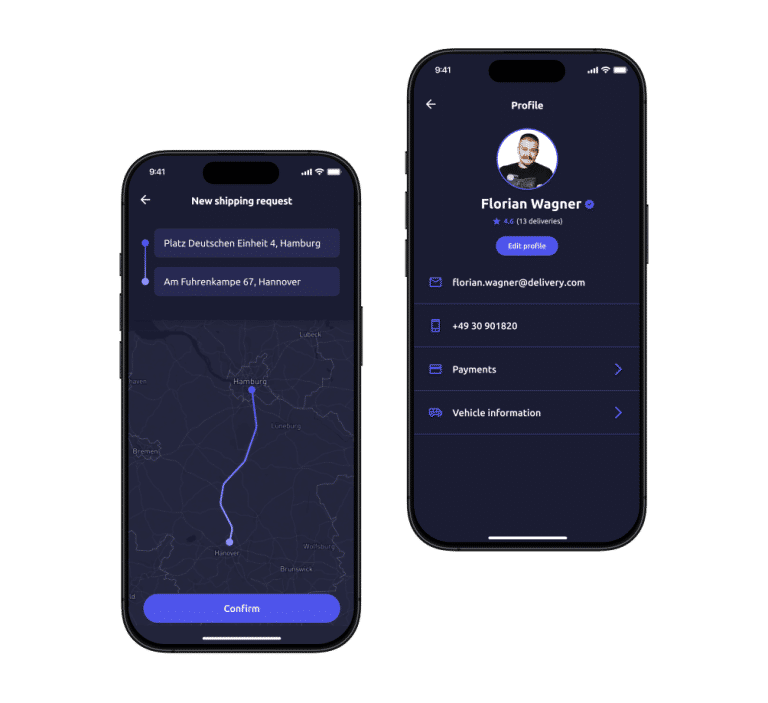
We designed user flow based on competitors’ analysis and came up with a decision to create an app for transport services with two different user roles: customer and transporter. This allowed us to make this online marketplace for transport services intuitively understandable and straightforward. We also provided an admin panel to manage delivery quotes, customer care, and security of the payment process for auto transport services and personal information.
Onboarding process
The onboarding process in apps of car transport companies could sometimes be tiresome and overregulated. To achieve a competitive advantage, we decided to go with interactive and gamified. The most critical processes, such as user verification, are required during registration, yet there are additional steps to ensure the increase of profile credibility. We made sure that the needs of users with different information consumption needs were covered, so created a section with various instruction types such as videos, texts, infographics, etc.

User navigation and filter system
Moving relocation services usually do not require an advanced filtration system. Yet during a deep market analysis, we discovered that end customers prefer to owe multiple choice possibilities. There’s an option to rank a supplier by the number of deliveries, location, type of vehicle, courier quote, parcel delivery quote, average rating, type of car or warranty, types of courier shipping services (type of a parcel, amount, weight, etc.), and more.
Delivery process
Sometimes, end users use vehicle shipping to transport expensive goods. That is why we decided to go with an advanced tracking system with the possibility of checking a courier not only using GPS, by also using photo and video materials to prove that shipment was not damaged during the car shipping process. There’s also a protected in-app messenger, so the user and driver can communicate with each other before, during, and after the transport moving services.
Security assurance
Our client is a new player among car shipping companies that aimed to develop a shipment marketplace to streamline the shipment process for individuals and businesses. From the beginning, we had to ensure the security of two extensive processes in the app: private customer data and shipment transactions. To cut costs and ease the processing of the moving services application, the Geniusee team decided to use the possibilities of 3d party providers using authorized APIs only. We integrated systems that kept essential and sensitive information at their side to fit under legal requirements. We also delivered a multifactor authentication and deployed proper session handling in the delivery service app.
Data analysis and presentation
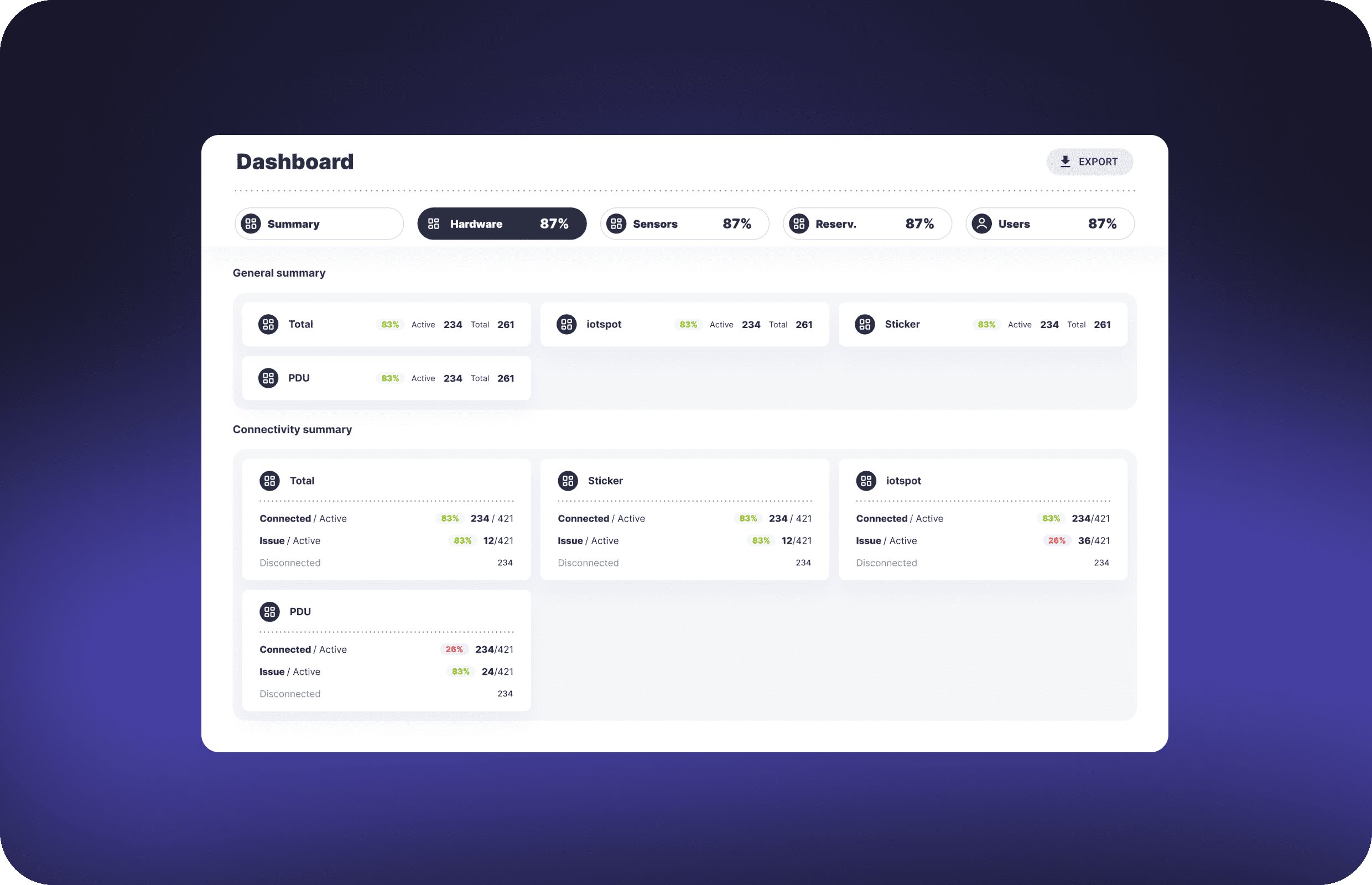
We decided to use multiple interactive dashboards, ranging them hierarchically in the car delivery app. For example, there are reports about suppliers’ activity, such as the number of completed orders, delivery time, rank, reasons for refusals, average price, typical issues if they have ever occurred, and more. The same functionality covers appliers’ activity, yet reviewing mode is limited for usual customers and could be viewed only in the process of shipment services order. The complete information is only available for the admin.
The MVP went live in 5 months, giving the client a functional, testable product and accelerating their go-to-market plan.
The platform now runs on a fully scalable AWS environment, removing the bottlenecks of the previous DigitalOcean/on-prem setup.
Shipment workflows gained higher stability and faster processing thanks to cloud-native architecture and automated deployments.
The mobile apps operate on a component-based structure, making feature expansion and maintenance significantly easier.
The client’s team received a unified CI/CD pipeline, shortening release cycles and reducing the risk of deployment issues.
The marketplace can now handle increased user activity and order volume without compromising performance or user experience.