About the client
WayWiser is a fintech and care coordination platform that helps families protect older adults from fraud, abuse, and financial mismanagement. By combining AI-driven risk monitoring with shared caregiving tools, WayWiser enables caregivers to coordinate support, safeguard assets, and reduce social isolation.
Business context
Our client came to us as we are experienced in native mobile application development and DevOps engineering services. Geniusee also has an ahead of the trends curve AI department, so we get on the line well, fast, and efficiently. Together we delivered a supporting system for families and caregivers to protect their close knits.
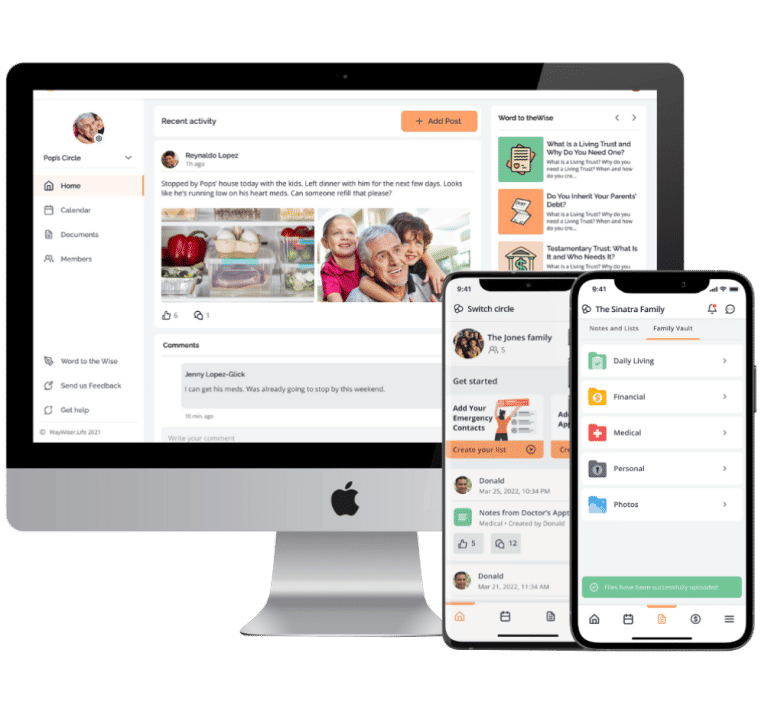
Altogether is a platform for care coordination made to help caregivers manage the care of their loved ones. It lets you connect with your team and work together to take care of your aging loved one. A private activity feed, secure document storage, a shared calendar, collaborative notes, and lists, and the power of a Trusted Circle allow Altogether to keep everything and everyone in sync.
Enhance production environments to improve productivity and customer experience with the end product
DevOps services on AWS for native application infrastructure, set up and configure the architecture stack with the existing one
Deep and complex user analysis to deliver a truly engaging experience
High-level security measures and compliance with legal and regulatory requirements for the collection and storage of personal and financial information
Solutions we implemented
We developed proactive collaboration with the client, offering solutions and improvements based on our expertise, market, user, and competitors’ research. The development process was based on Agile methodology. This way, our client managed tasks and priorities according to business needs. Instead of a big bang, we worked with small launches to respond to changes faster and more flexibly.
Project management
At this stage, we covered important project milestones. The project manager created a comprehensive plan for the app’s development, including timelines, budgets, and resource allocation. We also monitored the project’s progress and adjusted the plan as needed.
The project manager identified potential risks to the project and developed strategies to mitigate them. We also developed contingency plans in case unexpected issues arose. Our supervisory group drove the change in the board cycle, confirmed it with a client, conducted thought and necessity approval, managed the risk register, created a project guide, RACI framework, project schedule, and oversaw tasks and consent logs.
UI/UX design
We focused on creating an intuitive and user-friendly design that meets the needs of the app’s target audience. The process was based on user research that we conducted to gain insights into the target audience and their needs, preferences, and behaviors. We created user flows and wireframes to design the app’s structure, layout, and navigation. These designs may have been iterated upon and refined based on user feedback. Our team developed the visual elements of the app, including the color scheme, typography, and iconography. We ensured the app is accessible to all users, including those with disabilities. This involved incorporating features like high-contrast color schemes, keyboard navigation, and screen reader support. We also tested usability to ensure the app is easy to use and navigate. They may have identified pain points and made changes to the design based on user feedback.
Web development
We developed the frontend part using React.js. It was based on user interfaces, components, and pages designed by the UI/UX designer. The frontend development also included implementing user authentication, authorization, and session management.
Backend development was based on Node.js, AWS, and TypeScript. This involved creating RESTful APIs, handling requests, and managing the application logic. The backend development also included implementing data access layers, middleware, and security mechanisms.
Mobile development
We decided to go with React Native as it enabled faster development, high performance, and easy integration with the web app. React Native allowed the Geniusee team to go with cross-platform development, meaning developers can use a single codebase to develop apps for both iOS and Android platforms. Since React Native is built on top of the React framework, it enables seamless integration between web and mobile app components, allowing developers to reuse components and code across both platforms, thereby reducing development time and effort. React Native also supports TypeScript, a strongly typed programming language that helps catch errors and improve code quality. TypeScript also enables better tooling and editor support, making it easier for developers to write and maintain code.
Infrastructure development
We decided to go with a serverless architecture based on AWS. We designed the application architecture, database schema, and data model based on the architecture and infrastructure diagrams. We develop the database using PostgreSQL. Database development also included implementing data validation, indexing, and backup and recovery mechanisms. We used Terraform to automate the deployment of our infrastructure on AWS. We also created and configured resources, including EC2 instances, load balancers, and databases. The deployment automation also included setting up continuous integration and deployment pipelines.
DevOps
We ensure better performance, accessibility, and simpler network architecture of this application. If one NAT Gateway goes down, the instances in the private subnet can still access the internet through the NAT Gateway in another AZ. Improved application security and stability with the help of static code analysis and vulnerability scan. We used Docker to containerize the app and its dependencies. This ensured that the app could run consistently across different environments. The containerization also included setting up a container registry and managing container lifecycles.
QA/QC testing
We conducted penetration tests because regulators require them for FinTech projects. We employed an experimental approach, utilitarian examination, and relapse testing as part of manual quality assurance. By adding autotests for endpoints, end-to-end tests, and unit tests to the functionality, we automate the testing process. We also employed functional and non-functional testing, regression testing, smoke testing, and delivered unit cases.

Your Advisory Group
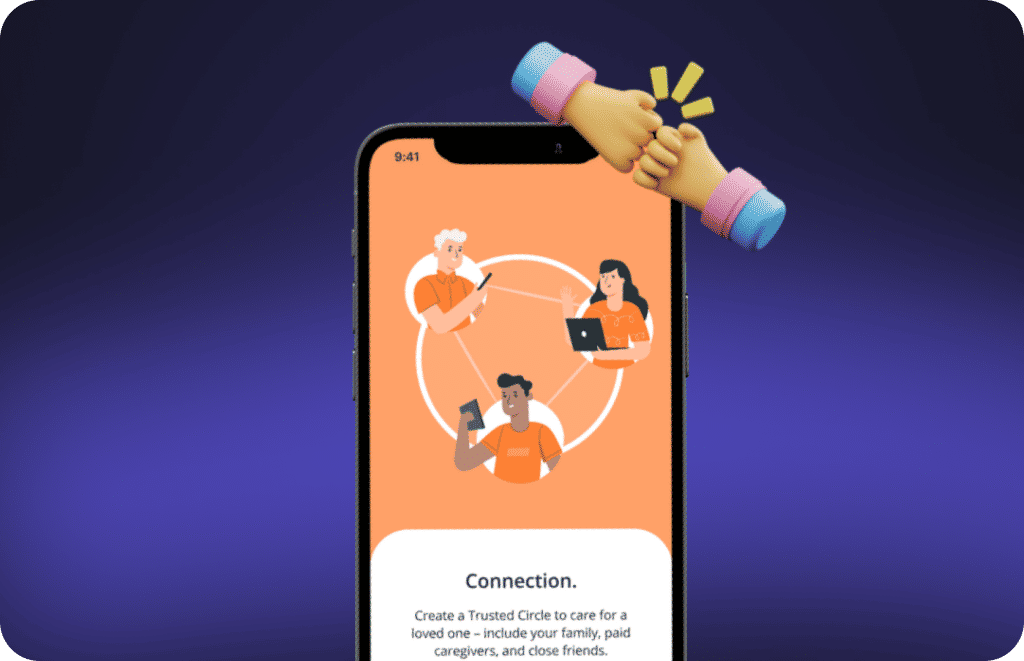
We provided functionality to gather the user’s entire team of caregivers in one secure, private environment. End customers could invite close friends, paid caregivers, and anyone else who helps with day-to-day care and manage their loved one’s finances, legal, or any other needs.
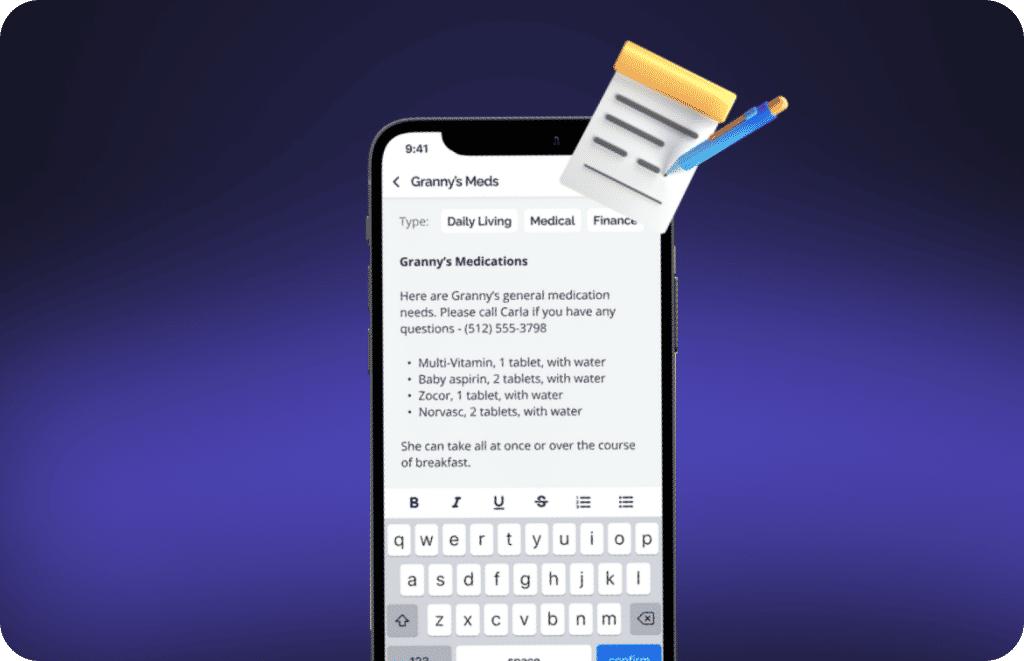
Lists and notes
Customers track providing care undertakings, oversee meds, team up on shopping records, store specialist notes, and more. our client’s system can be accessed on a computer or phone to ensure that users never miss important information.
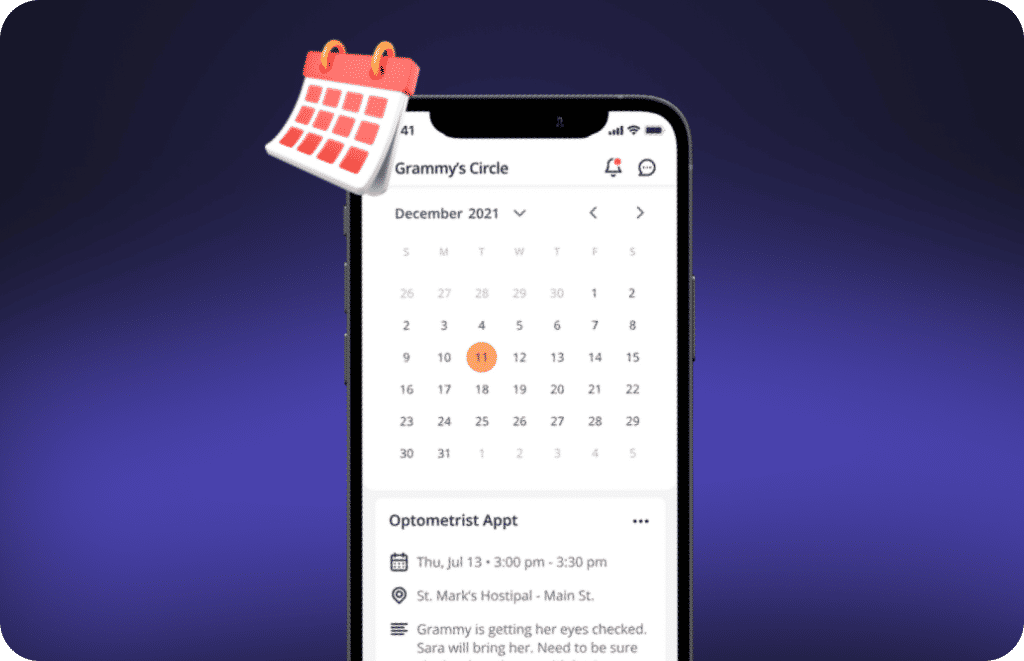
Shared calendar
Basic coordination is a core of the caregiving process. Users can set reminders, track incidents, create events, manage appointments, align caregiver schedules, and more. Everyone may know what has transpired and what is to come from this point forward.
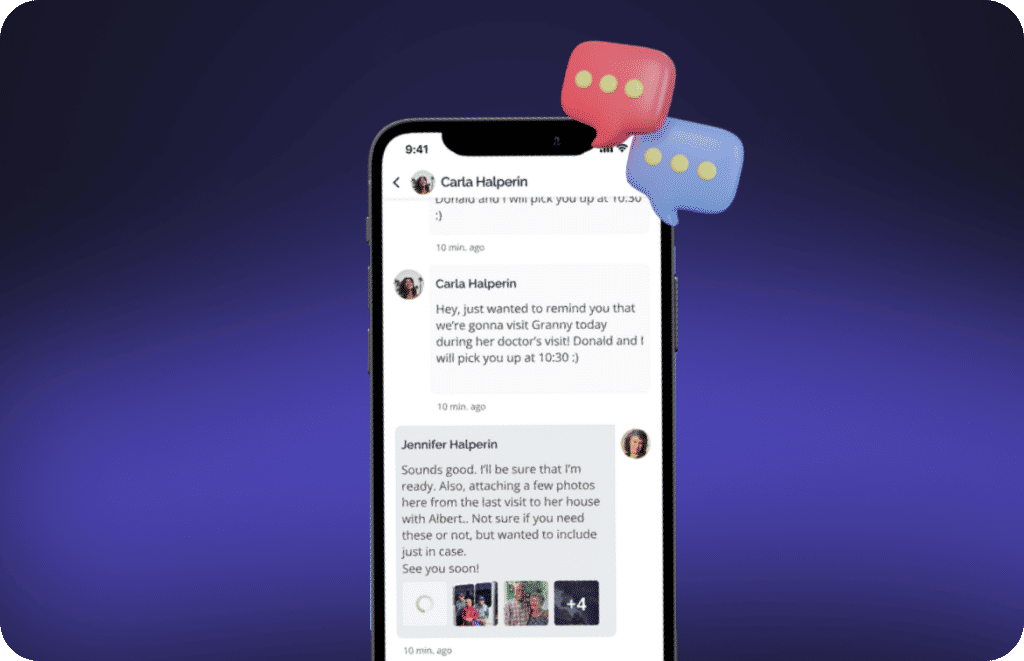
Messaging
Geniusee is experienced in providing security measures, so we ensured that in-app messenger is private and highly protected. Users may communicate directly through the secure, encrypted platform, and easily find caregiving messages easily when they need them most.
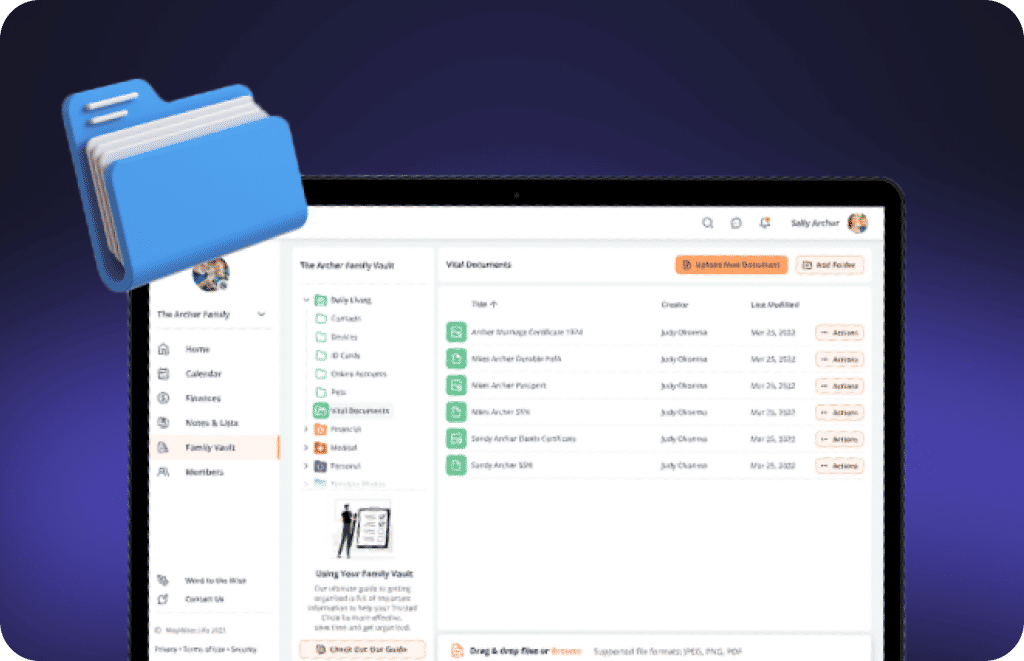
Storage for papers
We ensured a protected and easily manageable document storage for the end users. This is a safe place to keep insurance paperwork, IDs, bank statements, legal documents, wills, POAs, advance directives, medical bills, tax documents, and anything else that might be needed at any time.
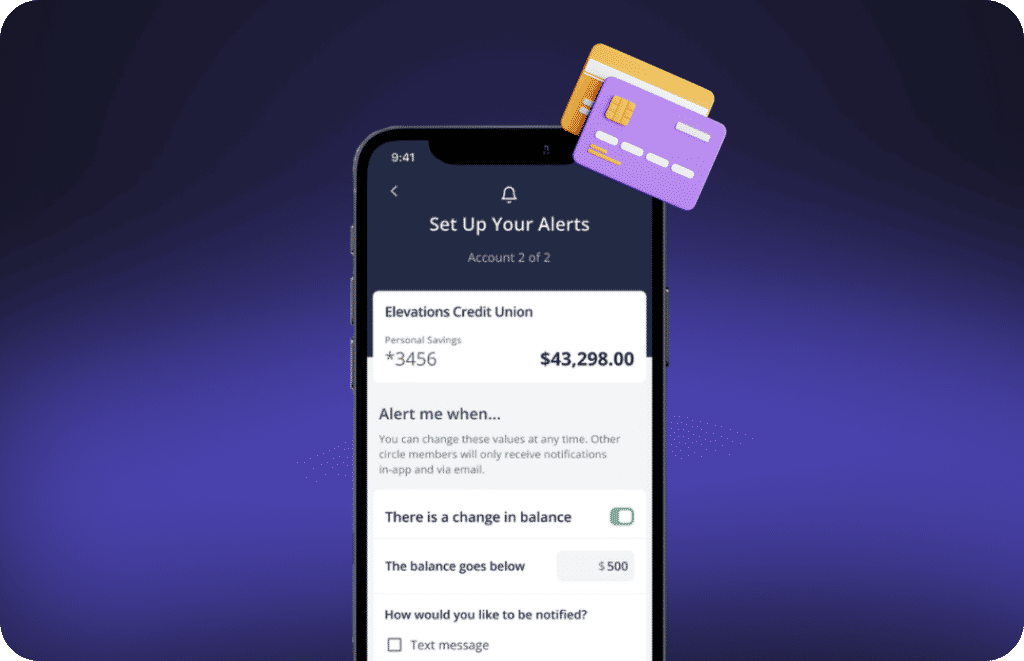
Financial surveillance
Members of the caregiving platform have access to financial account monitoring, custom alerts, and the ability to share suspicious transactions, allowing them to work together to solve the problems of their loved ones.
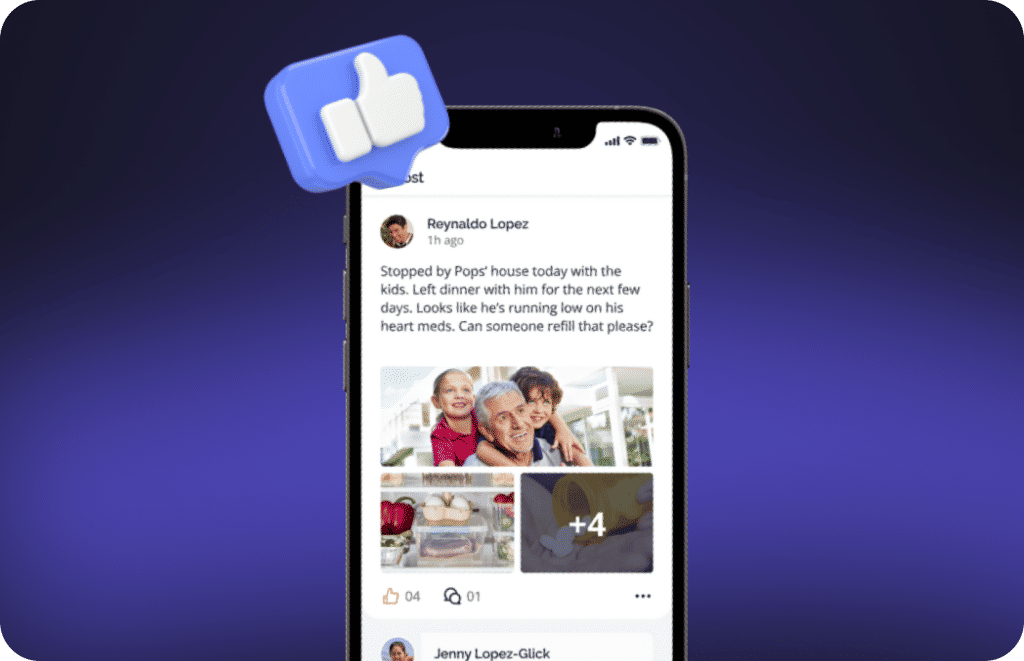
Activity feed
Our client’s users may post photos, send daily caregiving updates, ask questions, and keep everyone connected daily on their private activity feed.
We developed the platform, incorporated with AI, to help predict and prevent exploitation and protect loved ones’ assets while narrowing the gap in social isolation.
The end-user can post daily caregiving updates, share calendar events and appointments, track tasks, manage medications, and coordinate other critical facets of your care routine.
The platform is designed to be user-friendly and easy to use.
Altogether our client’s system is available on both iOS and Android devices.
The end-user can add any documentation on the platform and share it with the appropriate circle.
The end-users can make payments through the app.