

Manufacturing companies with complex machinery
Keep equipment problems from turning into production delays. AI is used in manufacturing to monitor machine signals, estimate failure risk, and help teams act before a breakdown compromises output. An intelligent approach can reduce maintenance costs for manufacturing equipment by 5 to 10% and increase uptime by 10 to 20%.
Producers focused on quality and consistency
Catch quality issues before they turn into material waste or rework. Manufacturing AI solutions use computer vision to flag defects in real time, reduce manual inspection pressure, and keep production going non-stop. In the right setup, AI-backed inspection can achieve a 95% defect-detection rate, reduce false positives by 99%, and cut inspection time to 90%.
Factories with repetitive or high-volume processes
Take repetitive work off your production team’s plate and keep output moving with more consistency. AI manufacturing systems help identify bottlenecks, improve scheduling, and support a steadier production rhythm. Companies using AI in production environments have reported 20% better cycle-time performance and 30% higher operational efficiency in specific workflows.
Predictive maintenance software
Keep equipment issues from turning into missed output, urgent repairs, and expensive downtime. As an AI development company for manufacturing, Geniusee can help you build systems that read machine signals, estimate failure risk, and help teams intervene before disruption spreads across the line.
AI visual inspection and defect detection systems
Catch defects when they appear, not after they become scrap, rework, or customer complaints. This is one of the clearest cases for AI in manufacturing: models trained on images and video can inspect with more consistency, reduce manual review pressure, and turn quality control into a faster, more scalable process.
Production optimization and bottleneck analytics
See where time, capacity, and margin disappear on the shop floor. Using AI in manufacturing enables identifying bottlenecks, comparing scenarios, and surfacing process adjustments that improve throughput, scheduling, and line balance without relying on guesswork.
Demand forecasting and inventory planning tools
Match production to real demand with fewer blind spots across supply chains, inventory, and order planning. The benefits of AI in manufacturing become especially clear here: better forecast accuracy, better stock decisions, and a stronger ability to react when market signals shift faster than static planning models can keep up.
Industrial IoT analytics platform
Turn sensor streams, machine telemetry, energy consumption monitoring, and plant-floor events into a single operational view your team can actually use. A connected AI platform provides manufacturers with live visibility into performance, anomalies, energy management, and resource use, while supporting enterprise AI workflows that link production data to planning, reporting, and decision-making.
Robotics and cobot intelligence software
Improve how automated equipment reads conditions, coordinates with other systems, and adapts during production. From robot monitoring to control policy tuning, AI helps teams with daily operations. The power of AI reduces repetitive manual work, making manufacturing with AI more stable, precise, and easier to scale. An AI copilot can support faster decisions, while a cobot helps people and machines work side by side more effectively.
Digital twin and simulation software
Model changes before they reach live production. Digital twins use AI and machine learning to represent equipment, production lines, and process conditions with greater fidelity. This gives teams a safer way to compare scenarios, validate capacity, and make sharper decisions on scheduling, maintenance windows, and resource allocation without incurring the cost of preventable trial-and-error.
Generative design and manufacturing knowledge systems
Build software that helps engineers explore better part designs, compare material options, and surface insights faster across the manufacturing sector. This is where generative AI in manufacturing starts to matter: you can use AI to generate design alternatives, technical summaries, or decision support that expands your team’s AI/ML capabilities and brings the practical benefits of AI into product and process engineering.
Quality management, supplier audit, and traceability systems
Bring inspections, audit trails, supplier checks, and product traceability into one controlled environment. For teams looking for more grounded AI cases in manufacturing, this solution type shows how data structure, workflow logic, and selective automation can improve accountability, reduce follow-up friction, and strengthen quality decisions across distributed operations.
Manufacturing copilots and operational decision support
Give engineers, planners, and supervisors a faster way to query plant data, review incidents, and act on manufacturing process recommendations. This type of software combines natural language interfaces or voice commands with production intelligence, helping teams extract the benefits of ML and AI technologies in a form they can use every day without adding another fragmented tool to the stack.






Predictive maintenance
Move maintenance from fixed schedules to evidence-based intervention with AI models that read machine behavior in context. These custom AI solutions for manufacturing help reduce unplanned downtime, extend equipment life, and keep service decisions aligned with production priorities.
Machine learning for quality control
Turn inspection into a faster, more disciplined process with vision systems that read surface variation, dimensional drift, and assembly inconsistencies at production speed. Our AI manufacturing solutions strengthen quality assurance, improve review consistency, and support more confident release decisions.
Process optimization
Expose throughput losses, hidden constraints, and workflow friction before they begin to erode output. Our custom manufacturing AI solutions help production teams refine line balance, tighten scheduling logic, and get more usable capacity from existing operations with new AI/ML tools.
Demand forecasting with AI
Translate demand signals into sharper production plans, cleaner inventory decisions, and better timing across procurement and fulfillment. The right AI software for manufacturing helps reduce stock pressure, protect continuity, and bring planning closer to real market conditions.
Customizable AI solutions
Start with your operating model, data reality, and production constraints rather than forcing generic tooling onto the plant floor. Our AI manufacturing solutions are shaped around your machinery, workflows, commercial targets, and the specific pressure points that hold performance back.
Robotic process automation
Shift repetitive digital and operational tasks away from manual handling and into controlled automated flows with RPA. AI for manufacturing helps free up skilled staff for supervision, exception handling, and higher-value work that calls for judgment rather than repetition.
AI-managed alert monitoring
Build a real-time warning layer that flags instability before it turns into downtime, damaged hardware, or missed production targets. This gives operators and managers a clearer way to track machine behavior, process deviations, and response priorities across the line.
Robot programming
Reduce the engineering effort required to configure, adjust, and redeploy robotic equipment as production needs reform. Better programming logic improves robot performance, supports more demanding tasks, and makes automation easier to scale across the floor.
Big data analytics
Fetch sensor streams, production records, quality data, and equipment events into one analytical environment your team can actually use. This creates a stronger basis for process decisions, operational visibility, and long-range planning grounded in manufacturing data rather than assumptions.






Reduced costs and increased efficiency
AI for manufacturing helps cut waste where it usually hides: unplanned downtime, avoidable scrap, weak scheduling, and uneven resource use. When predictive maintenance, defect detection, and demand forecasting share a common data foundation, manufacturers can lower operating costs and achieve greater output from the assets, materials, and labor already in place.
Improve quality and consistency
Quality becomes easier to control when inspection relies on real-time signals rather than fatigue-prone manual review. These AI manufacturing solutions use computer vision and sensor data to detect defects, flag anomalies, and support corrective action before small issues move downstream into larger production or customer problems.
Data-driven decision making
Strong manufacturing decisions depend on visibility, not assumptions. AI turns large volumes of operational data into practical insight, helping teams see where performance slips, where variation builds, and where process changes are likely to produce measurable gains across the plant.
Reduced costs and increased efficiency
AI for manufacturing helps cut waste where it usually hides: unplanned downtime, avoidable scrap, weak scheduling, and uneven resource use. When predictive maintenance, defect detection, and demand forecasting share a common data foundation, manufacturers can lower operating costs and achieve greater output from the assets, materials, and labor already in place.
Improved quality and consistency
Quality becomes easier to control when inspection relies on real-time signals rather than fatigue-prone manual review. These AI manufacturing solutions use computer vision and sensor data to detect defects, flag anomalies, and support corrective action before small issues move downstream into larger production or customer problems.
Data-driven decision making
Strong manufacturing decisions depend on visibility, not assumptions. AI turns large volumes of operational data into practical insight, helping teams see where performance slips, where variation builds, and where process changes are likely to produce measurable gains across the plant.

Our portfolio
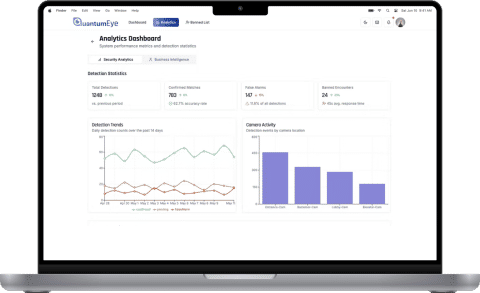

Scaling Edge AI & computer vision: QuantumEye real-time surveillance platform
Geniusee helped the QuantumEye AI platform that upgrades legacy CCTV with real-time detection, instant incident notifications, and decision-ready analytics.
Case details
Permio: AI-powered permit workflows for Service First Permits
Permio is an AI-powered permitting platform built for Service First Permits to automate workflows and accelerate approvals across 240+ jurisdictions. Geniusee worked closely with SFP to design, engineer, and validate a system that modernizes the entire permitting lifecycle.
Case details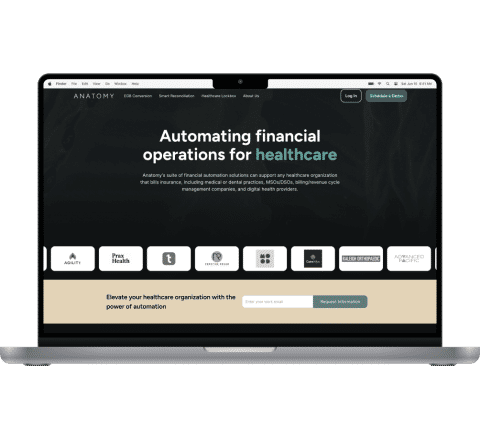
Anatomy Financial: Automated financial management software for healthcare
Anatomy introduces an innovative solution designed to automate document processing, compare various documents and banking transactions, and handle the intricacies of physical check processing. By conducting a thorough analysis, the system identifies discrepancies between the declared prices of medical procedures and the actual amounts received by the clinic.
Case details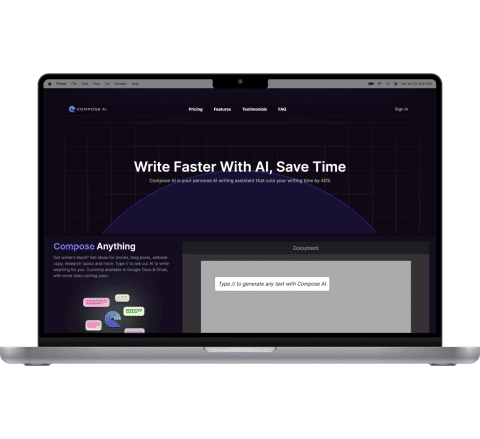
 Martech
Compose AI: Advanced content writing solution
We partnered with Compose AI to enhance their AI-powered writing platform through cloud migration, UX improvements, seamless integrations, and scalable feature development, upporting their growth from YC-backed startup to a widely adopted productivity tool.
Case details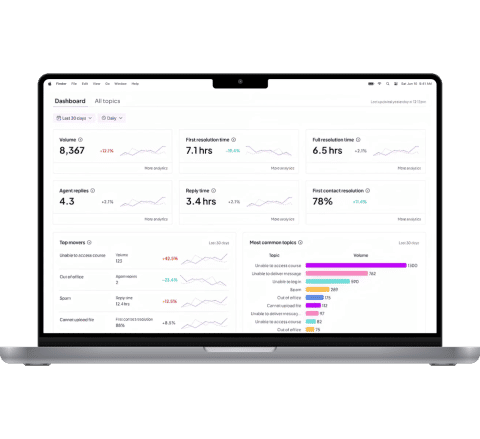
 Martech
Forethought: Enterprise AI agents for customer support
Forethought partnered with Geniusee to extend and integrate its AI-powered support platforms (Assist and Discover) into complex enterprise environments. We helped enhance real-time agent assistance, streamline multi-system connectivity, and deliver a unified support experience across channels. The result is a scalable AI agent ecosystem that accelerates resolution times, boosts team productivity, and powers more consistent customer experiences.
Case details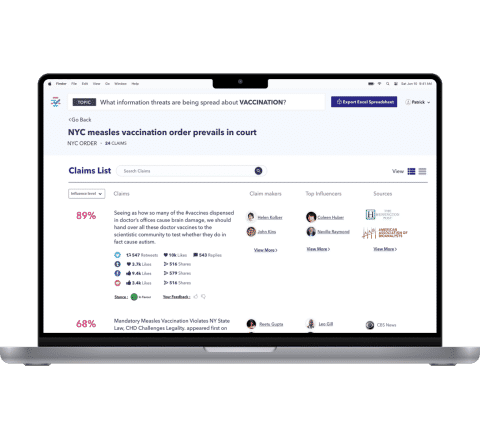

Enhancing FactMata’s AI to detect misleading content at scale
We partnered with Factmata to scale their AI platform for analyzing online content at volume, enhance data pipelines, and modernize their NLP models. Our team strengthened system performance, improved processing efficiency, and enabled Factmata to handle millions of records with higher accuracy and lower operational cost. By implementing our expertise in machine learning, natural language processing, and data analysis, we worked closely with FactMata to create web scrapers and optimize data pipelines and the project’s overall performance. The client addressed Geniusee to modernize their platform by combining real-time IoT data, AI analytics, and an intuitive user experience. The result: a scalable, secure, and analytics-driven ecosystem that helps enterprises make informed workspace decisions.
Case detailsDiscrete manufacturing
AI can refine robot movement, predict equipment failures, and support machine learning models for defect detection and generative design. This makes manufacturing AI solution development especially valuable in environments where precision, equipment uptime, and design iteration directly affect output and margin.
Continuous manufacturing
AI can improve production flow, predict maintenance needs, forecast inventory and demand, and detect anomalies in real time. In continuous operations, manufacturing AI software engineering helps teams maintain process stability, reduce costly interruptions, and respond faster to shifts in throughput or supply conditions.
Repetitive manufacturing
AI can automate repetitive tasks, strengthen quality control, improve production planning, and support better supply chain coordination. That matters most in high-volume settings, where small gains in consistency, speed, and scheduling discipline can compound quickly across the line.
Batch process manufacturing
AI can help refine recipes, monitor process conditions, predict maintenance, and manage inventory across multiple ingredients or materials. This gives manufacturers tighter control over batch quality, resource use, and production timing when each run carries its own variables.
Genuisee’s versatile experience, gained over more than 8 years, has enabled us to form a team with a proven track record.







Certified AWS Partner delivering secure, scalable cloud-native solutions.

ISO-compliant processes ensuring quality, security, and reliability.

Trusted integration partner for financial data connectivity and open banking.

Team of ISTQB-certified QA engineers for world-class software testing.

Consistently rated ★5.0 by clients for reliability and delivery excellence.

Accredited partnership supporting advanced testing and continuous QA automation.
What is AI in manufacturing?
Artificial intelligence in manufacturing helps companies run production faster, safer, more precisely, and with automated control. It combines machine learning, computer vision, predictive analytics, and Industrial Internet of Things (IIoT) data to improve maintenance, quality control, planning, and safety. In practice, teams use it for anomaly detection, time-series analytics, and sensor fusion across machines and production lines. The smart manufacturing market is projected to reach $238.8 billion by 2028.
What problems can AI solve in manufacturing?
AI for manufacturing helps reduce long production cycles, unplanned downtime, inconsistent quality, and waste, and improves supply chain management and controls safety risks. It is also useful when manual checks miss defects, when processes drift off target, or when demand changes faster than the plant can respond. These issues often affect throughput, yield, operating margin, and customer satisfaction simultaneously.
How does AI improve efficiency in manufacturing?
AI technologies in manufacturing automate repetitive work and provide teams with better data for faster, more efficient decisions. It supports assembly, packaging, transport, inspection, and bottleneck analysis, helping operators identify where output slows. Are there any proofs that smart factories work better? Many global brands reported crucial improvements in their manufacturing operations after they implemented AI systems in their enterprises: Siemens reported 20% better cycle-time performance in AI-supported robotic systems. Its Amberg facility also reached 75% automation and a 99.99885% quality rate.
Can AI reduce maintenance costs and downtime?
Absolutely. Predictive maintenance is one of the clearest use cases for AI software for manufacturing. These models analyze sensor data, machine history, and operating conditions to estimate remaining useful life and flag issues before equipment fails. This approach can reduce maintenance costs by 5–10% and increase uptime by 10–20%.
What results can predictive maintenance deliver in real factories?
The payoff can be substantial when the system has reliable equipment and environmental data. General Electric reported a 25% drop in unexpected engine breakage and more than $1 billion in annual savings through AI-based maintenance. Airbus also used AI-powered analytics and smart sensors to forecast assembly-line issues. That helped extend machine life by 20–40%.
How is computer vision used in manufacturing quality control?
Computer vision, or machine vision, in industrial settings helps inspect products, surfaces, and production lines with greater consistency than manual checks. After training on images and video, the model can detect subtle defects, deformations, and early signs of process drift in real time. This makes quality control faster, more repeatable, and easier to scale. It remains one of the most practical AI solutions for manufacturing today.
How accurate are AI-powered visual inspections?
When the system is trained on the right data and deployed in the right production context, the performance figures are compelling. AI-based inspection can achieve a 95% defect-detection rate and reduce false positives by 99%, which lowers the false reject rate and reduces unnecessary review. It can also cut inspection time by 25–90%, improve inspection accuracy by 30–80%, and reduce labor costs by 10–30%.
Can AI help reduce scrap and production waste?
Yes, and this is often where the commercial impact becomes visible first. AI can trace defects back to raw materials, machine conditions, or process variation, then support corrective action before those issues spread further through production. Condals Group Foundry used AI-driven analytics to reduce scrap by 45%, which lowered rework and improved profitability at the same time.
How does AI support production planning and process optimization?
AI gives production teams a clearer view of bottlenecks, scheduling pressure, and underused capacity. It also supports simulation modeling and digital twins, which let manufacturers test process changes before they reach the shop floor. Nestlé used AI to simulate production lines and adapt to seasonal demand, helping cut operating costs by 14–20%.