For decades, “precision agriculture” often meant little more than a GPS on a tractor and a basic spreadsheet. That’s no longer enough. As labor costs rise and weather patterns become unpredictable, the gap between “traditional” and “smart” farming is widening into a measurable cost gap.
By 2028, the AI-in-agriculture market is projected to reach $4.7B, not because it’s a trend, but because it’s becoming the only way to stay profitable. Today, AI-powered solutions are gaining momentum by turning raw data into earlier signals and better probabilities so your teams can react before losses occur.
Key takeaways
- AI has moved beyond simple monitoring to generative modeling, where algorithms simulate crop responses to stressors before planting begins.
- Real-time processing via Edge AI on smart machinery solves connectivity issues in remote areas by eliminating reliance on the cloud.
- Modern precision farming relies on data fusion, combining satellite imagery and soil sensors with computer vision models such as YOLO.
- Mobile-first diagnostic tools and offline-capable models make advanced technology accessible to smallholder farms and emerging markets.
- AI serves as a risk-mitigation layer, transforming traditional farming from a reactive struggle into a predictive, data-backed business.
What are the core AI apps in agriculture?
AI is no longer just supporting operations. It’s reengineering the whole agricultural value chain. Let’s examine the most impactful AI use cases in advanced farming, with real-world use cases.
Precision agriculture
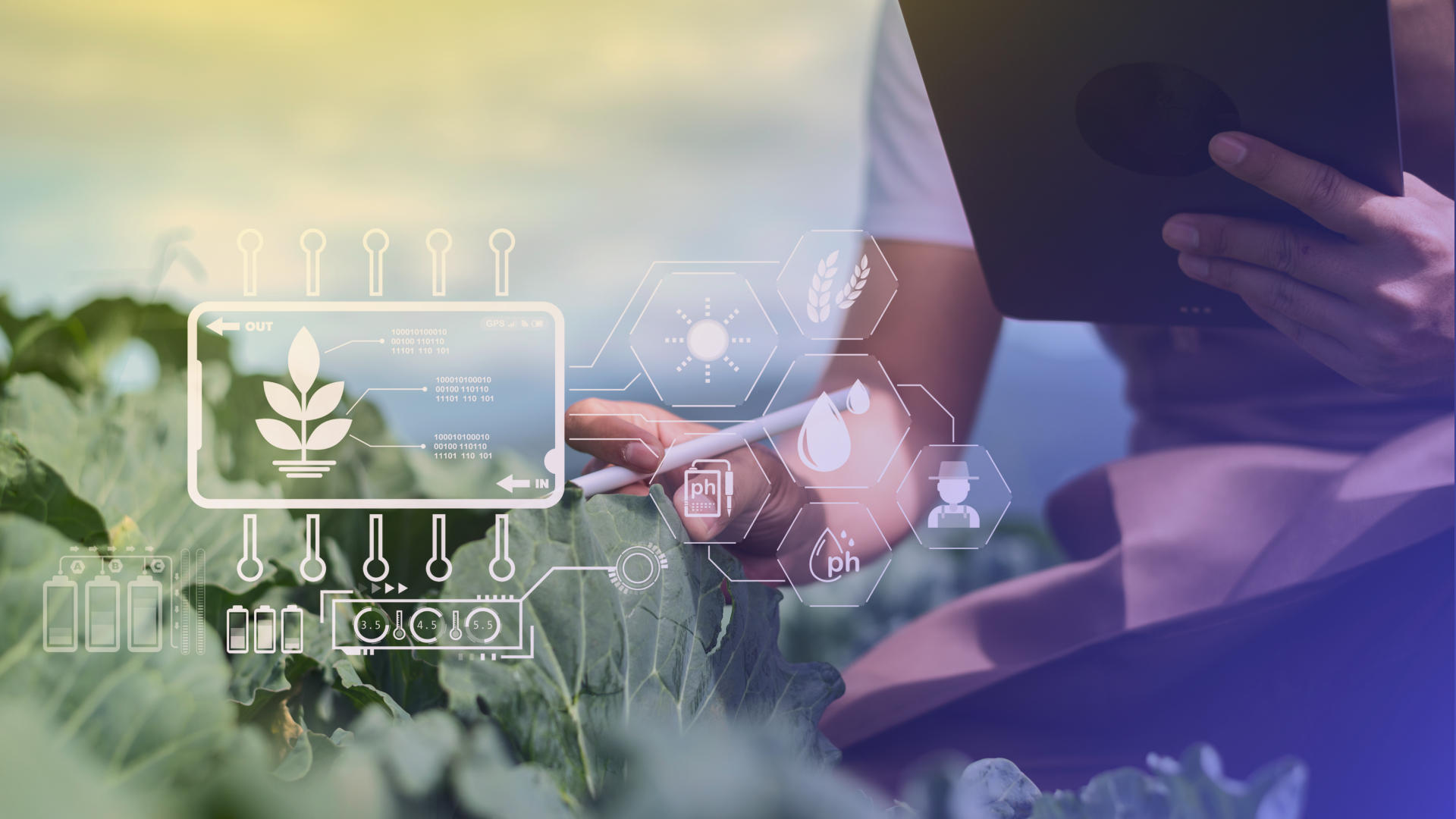
In precision agriculture, AI supports continuous crop management by adjusting decisions at each stage of the growing cycle. Soil and crop sensors continuously measure moisture levels, pH balance, and nutrient availability across the field. At the same time, AI-powered drones with computer vision generate dynamic visualizations of crop health, enabling targeted interventions.
Predictive algorithms in irrigation systems adjust water output based on soil information and weather forecasts. This approach reduces resource waste while improving cost efficiency and sustainability. A standout example is John Deere’s See & Spray. They use computer vision to differentiate between crops and weeds in milliseconds, reducing herbicide use by up to 77%.
Yield and weather predictive analytics
ML models such as LSTMs and XGBoosts help forecast crop yields, optimize planting schedules, and adapt to changing climate patterns. These models rely on multi-year datasets combining satellite, climate, and historical yield data.
Take, for instance, historical yield datasets, satellite imagery, and hyper-local climate information. The output supports decision-making at critical stages such as planting, irrigation, and harvest timing. A key example is the IBM Watson Decision Platform, which combines environmental and market conditions to support smarter planning, maximize yield, and reduce risk.
Use case: NASA Harvest AI-based crop crisis monitoring
After Russia’s full-scale invasion of Ukraine, Ukrainian authorities had to obtain quick, credible information about the quantity of wheat and grains lost in occupied and deserted territories. Traditional agricultural reporting proved too slow to support decision-making under active conflict conditions.
Inbal Becker-Reshef led NASA Harvest in mapping crop losses, tracking new planting, and estimating yield reductions in near-real time using satellite imagery, remote sensing, and AI models. This helped policymakers avoid export restrictions that would have intensified global food supply disruption.
Building on this success, Becker-Reshef created a Global Rapid Crop Evaluation Center — a crisis-response center by governments and aid organizations. With funding from Google, Microsoft AI for Good Lab, Planet Labs, NASA, and UN FAO, the platform has since provided early warnings of crop damage from conflict and extreme weather in areas such as Pakistan and Sudan.
Pest and disease detection
Early detection of pests and diseases plays a decisive role in protecting crop yields. AI combines IoT sensors with anomaly detection and deep learning to identify minor signs of stress or infection.
Tools such as Plantix provide users with image-based mobile diagnostics. It uses computer vision models to classify diseases from leaf images and suggest next steps.
Livestock monitoring
AI enhances animal welfare by enabling continuous tracking through smart livestock systems. Wearable devices track temperature, feeding schedules, and movement patterns to quickly detect lameness or illness. Pattern-recognition algorithms monitor feeding cycles, reducing manual work and improving farm productivity.
A notable example is Datamars (formerly Connecterra), an AI-powered assistant for dairy farms. It analyzes animal behavior in real time, helping farmers reduce veterinary costs and optimize feeding to achieve healthier, more efficient operations.
Robotic growth technology
Smart farming is shifting toward fully autonomous operations with machinery. Tractors and harvesters with LIDAR, GPS, and real-time object recognition reduce dependence on manual labor and ensure consistent daily operations.
Leaders like CNH Industrial, AgXeed, and Clearpath Robotics’ OutdoorNav are embedded autonomy platforms that drive innovation. These improvements demonstrate how AI isn’t merely evolving, but shifting toward scalable, long-term adoption.
Supply-chain optimisation using AI
AI enhances post-harvest operations by streamlining logistics, reducing spoilage, and synchronizing delivery with market demand. Predictive analytics help plan production and inventory, while AI blockchain integration enhances traceability and ensures regulatory compliance.
Platforms like CropIn SmartFarm provide full farm-to-fork visibility with real-time monitoring of inputs, outputs, and logistics. This improves harvest protection and supply chain agility in a volatile market.
Underlying technologies
The agricultural sector is increasingly reliant on AI as advanced technologies are integrated into everyday farming operations. Let’s define the core frameworks that power the most impactful AI programs in agriculture:
Computer vision
Computer vision enables machines to interpret and respond to their environment on the farm. Advanced models like YOLO (You Only Look Once) and RT-DETR (Real-Time Detection Transformers) lead the way in delivering rapid, accurate image recognition.
In practice, it enables AI systems to distinguish crop types across large fields, accurately detect weeds to apply herbicides to the target area, and use drone footage to assess crop maturity and determine harvest timing.
These systems can provide more consistent and precise information throughout the growing season. They replace manual field checks, which are slow, inaccurate, and cannot be conducted as frequently.
ML models
In contemporary farms, AI is used in the background to combine various sophisticated learning methods. Other algorithms analyze historical data to understand yields and track crop health, while others analyze trends in unlabeled data to identify patterns of disease or environmental stress earlier than humans.
Generative AI even models how crops would respond to changes in soil, irrigation, or pest conditions, assisting farmers in planning. In the meantime, reinforcement learning will train autonomous machines, including drones and tractors, to navigate fields and make on-the-fly decisions as conditions vary.
Together, these AI models adapt effectively to various farming systems, climate zones, and market needs, making them highly scalable across regions.
Data sources and combination
Efficient AI applications are built on large datasets that accurately reflect real-world farming conditions. The new world of agriculture is increasingly incorporating both satellite imagery, including Sentinel-2 images to scan fields and delineate crop areas, and IoT sensors that generate real-time data on soil conditions, weather, and crop development. High-resolution, geo-tagged drone images also enhance this data space and capture variability in the field that satellites may miss.
Collectively, these streams feed centralized AI engines or Edge AI platforms that work together to provide farmers with real-time operational visibility, enabling quick reactions and practice adjustments.
Edge AI and connectivity
Edge AI and connectivity have emerged as essential enablers of the new form of agriculture, especially in areas with unstable access to cloud computing. It reduces latency by processing data on-site, eliminating the need to send it to remote locations for processing and feedback (e.g., smart tractors, drones, and distributed field sensors). This is particularly relevant in rural areas with limited infrastructure.
Technologies such as 5G, Low-Power Wide-Area Networks (LPWAN), and farm-level mesh networks enable stable communication between fields and processing systems. They facilitate AI-based automation, such as smart irrigation control and real-time pest detection, even in low-connectivity areas.
What are the benefits of AI in agriculture?
AI optimizes allocation and minimizes risk across the enterprise. Implementing AI-driven solutions enables farming establishments to shift from reactive control to a predictive approach, improving decision-making and operational efficiency.
Increased yield and reduced inputs
AI-driven precision farming optimizes planting schedules, identifies unproductive field areas, and selects the most suitable crop rotations for each field. These enhancements increase crop yield while reducing seed waste and manual labor tasks.
Water, fertilizer, and pesticide optimization
Smart irrigation systems optimize watering and nutrient delivery by utilizing real-time sensor information, satellite imagery, and weather forecasts, all powered by AI. These technologies promote sustainability by reducing runoff, conserving water, and minimizing pesticide use.
Risk mitigation
Predictive AI models detect potential pest infestations and crop infections earlier than they spread. This proactive method minimizes crop damage, prevents significant losses, and ensures the long-term health of the field or crop.
Data-driven decision-making
Drones, IoT devices, and satellite networks constantly feed AI systems with real-time data, delivering actionable insights to farm managers and agronomists. This constant data flow enables smarter, quicker decisions across every component of agricultural operations, optimizing performance and productivity.
Challenges
Despite these benefits, full-scale adoption of AI in agriculture remains challenging. Several systemic troubles affect both the rate of adoption and the actual performance in real-world settings.
Data quality & availability
High-quality and domain-specific data, which are the core of AI, are also usually absent in most rural regions. Farmers may access sensors or basic records, but inconsistent calibration and data quality make reliable predictions difficult. One farm’s soil moisture level may be reported as perfect, while a nearby farm may be off by a considerable margin. This creates gaps in AI models that rely on consistent, trustworthy inputs.
Infrastructure constraints
Additionally, there is the problem of infrastructure. Poor connectivity in isolated areas will make cloud solutions a luxury rather than an instrument. When there is connectivity, the cost of AI-enabled tractors, drones, and smart sensors is very high. Unfortunately, this makes them unaffordable to many small and mid-sized farms. Farmers may be aware that precise irrigation or machine harvesting can save time and reduce costs, but the implementation costs may make it almost impossible.
Adoption & usability
Even when the technology is available, human factors come into play. Farmers are usually able to use the simplest digital tools, though in-depth use of AI would require specialised training that is not readily accessible.
Many AIs aren’t available in other languages, hindering their use in areas where those languages are predominant. On top of this, other farmers remain unconvinced that generations of practical experience can make it feel unsafe to leave important planting or irrigation tasks to machines. This leads to reluctance to proceed with automation.
Ethical & regulatory problems
Lastly, the industry is clouded by ethical and regulatory concerns. Concerns about ownership of farm data, its exploitation, and the implications of robotizing labor are very real.
AI systems often operate as black boxes, leaving farmers and even regulators uncertain about the decision-making process and who should be held responsible if things go wrong.
These issues underscore that, although AI is efficient and will deliver improvements, it should be implemented carefully, with support for the technology and for the individuals working with it. Balancing these benefits and challenges is key to successful AI adoption in agriculture.
AI in agriculture: Benefits vs. challenges
| Category | Benefits | Challenges |
| Yield optimization | Higher crop yield, reduced input waste | High-quality labeled datasets are required |
| Resource efficiency | Smart use of water, fertilizers, and pesticides | Expensive sensors and smart systems |
| Risk mitigation | Early detection of pests, diseases, and weather threats | Limited by rural connectivity |
| Decision support | AI dashboards for dynamic planning | Usability and training gaps for field staff |
| Operational agility | Autonomous machines reduce labor dependence | Risk of job displacement, ethical concerns |
Regional use cases and success stories
Advanced technologies in agriculture are accelerating internationally. However, differences in nearby infrastructure, crop varieties, and farming practices affect fulfillment. The following examples illustrate how AI is transforming farming across various geographic settings.
India
India nevertheless faces low productivity among smallholder farms, great crop losses, and disrupted monsoon patterns. Scalable AI solutions addressing these challenges have shown validated positive effects.
The AI Sowing App, developed in partnership with Microsoft and ICRISAT, combines machine learning with climate forecasting to advise on the most advantageous sowing time. This method boosted crop productivity by 30% in pilot districts.
United States
The USA leads in synthetic intelligence integration and capital access, making it a hub for precision agriculture and automation.
Companies like Blue River Technology and AgXeed illustrate this evolution. They’ve released autonomous tractors and robotic harvesters powered by AI systems, courtesy of OutdoorNav, driving intelligent farming toward widespread adoption.
Netherlands
As an early leader in sustainable farming, the Netherlands actively applies AI in managed environments like vertical farms and greenhouses.
Wageningen University’s AI Lab specializes in developing AI models to optimize weather manipulation, irrigation management, and crop production in hydroponic systems and glasshouses.
Africa
To succeed in low-resource environments, AI adapts via mobile-first offerings and area AI solutions.
PlantVillage Nuru provides a mobile diagnostic tool that utilizes AI algorithms to detect diseases in cassava and maize using smartphone cameras, with offline capabilities for remote areas.
Prospects for the future
Today, the focus shifts from isolated answers to multimodal, integrated systems that address challenges such as workforce shortages, climate dangers, and food security. Scalable, interoperable technology that serves both smallholder farmers and large agribusinesses holds the key to the future of farming.
Tools for next-gen AI
New technologies are expanding abilities beyond automation and prediction to include long-term planning and simulation.
- Foundation models for agriculture: Large, domain-specific models trained on multimodal data. Comprising satellite imagery, sensor readings, and genomic datasets, they generalize across various areas and farming strategies.
- Generative AI: This technology simulates artificial vegetation to model yield responses based on factors such as soil type, irrigation, and pest exposure. It enables stepped-up crop selection, reduces losses, and accelerates field checks before planting.
- Predictive energy: AI continues to evolve by integrating climate simulators, supply chain forecasts, and historical anomaly data.
AI robotics synergy
Combining AI and robotics is poised to enable autonomous, 24/7 farm systems that operate effectively in both open fields and controlled environments.
- Multi-bot coordination: AI-driven swarm robots dynamically distribute field tasks. For instance, one robot monitors crop health, while the other handles micro-dosing of nutrients.
- Soft robotic harvesters: AI-powered actuators with precise motor control enable the handling of delicate produce, such as strawberries and tomatoes, minimizing damage.
- Embedded structures: OutdoorNav permits real-time decision-making at the edge, decreasing reliance on cloud infrastructure.
Policy, standards, and open data
Sustainable AI adoption requires a coordinated effort from industry vendors, governments, and farming communities.
- Interoperability standards: Initiatives like AgGateway and the Open Ag Data Alliance are working to unify AI structures, IoT devices, and farm control platforms for seamless data exchange.
- Public sector support: EU, U.S., and Indian governments actively invest in AI agriculture, subsidizing sensors, connectivity infrastructure, and farmer schooling to close the adoption gap.
- Open data platforms, such as FAO’s Hand-in-Hand geospatial platform and Google’s Open Buildings, enhance crop yield modeling and infrastructure planning, particularly in low-connectivity areas.
Wondering if your agri-AI setup is optimized?
We’ll review your tools, spot inefficiencies, and show how others are scaling smarter.
Talk to an expert!Conclusion
The integration of AI in agriculture isn’t a future trend. It’s an urgent necessity to rework every step of the agricultural value chain. From crop choice and yield prediction, AI boosts efficiency, reduces environmental impact, and drives faster decision-making across the industry.
But innovation alone isn’t sufficient. The effectiveness of AI solutions relies on accessibility, farmer-centered design, and frameworks that connect big agribusinesses with smallholder farms. Inclusive technology adoption, supported by transparent models, localized training, and public-private partnerships, will shape how effectively agriculture transitions into AI-driven technology.
Ultimately, AI isn’t replacing farmers: it’s empowering them. When thoughtfully applied, AI becomes a tool of resilience, unlocking a more effective, sustainable, and food-secure future.
Looking to implement AI for your agricultural operations?Geniusee partners with leaders and enterprise innovators to build tailor-made AI solutions—everything from analytics to self-sufficient systems. Contact us to discover how we can transform your agricultural commercial enterprise with custom AI solutions.
Is AI limited to big farms or businesses?
No. AI tools becoming available to smaller and mid-sized farms include mobile applications, low-cost sensors, and cloud-based systems.
When will AI deliver results in the agricultural sector?
The practical benefits achievable through numerous farms in the first season of implementation include measurable improvements in yield/input efficiency and pest detection.