
Cost optimization
Reduce development costs by up to 20% with AI-driven automation for testing, infrastructure, and programming.
Reduced development time
We can quickly build a PoC using AI so you can focus on business value and iteration instead of writing code. With us, you can develop solutions up to 50% faster.
Streamlined audit
Through regular AI security checks or automatic detection of outdated tests, you will improve audit readiness.

AI audit
Bad code is expensive. Slow tests are worse. We run AI-powered analysis across your codebase to surface security vulnerabilities, eliminate redundant tests dragging down your pipeline, and identify unnecessary infrastructure spend. Most clients recover 15–25% of infrastructure costs in the first audit cycle. You get a prioritised findings report, not a generic checklist.
Custom AI-powered app development
We don’t bolt AI onto a finished product and call it done. From the first sprint, we configure AI for test writing, compliance validation, and automated prototyping, so your team delivers faster without accumulating technical debt. Whether you’re starting from a napkin sketch or a funded PoC, we build the architecture around AI from day one.
Custom LLM development
Off-the-shelf models are a starting point, not a finish line. We develop domain-specific AI models built on your proprietary data, giving you prediction accuracy, relevance, and compliance control that no SaaS API can match. Fully yours, fully deployable on your infrastructure.
AI integration into existing apps
Your iOS or Android app is already working. The question is whether it’s working as well as it could. We integrate AI components (conversational interfaces, face recognition, predictive analytics, recommendation engines) into your existing codebase without a full rebuild. Most integrations are scoped, tested, and live within 6 to 10 weeks.
Performance optimization and AI enhancement of existing apps
Slower prediction models lose users. We replace underperforming AI components with current-generation models, retune existing ones against real usage data, and optimise the infrastructure running them. The outcome is measurable: better accuracy, lower latency, reduced compute cost – not a vague improvement in “user experience.”
AI staff augmentation
Hiring a senior AI engineer takes 3 to 5 months on a good day. We place AI specialists directly into your team — engineers who build custom Skills that make AI models work for your codebase. They enforce your security protocols on every pull request and refactor your legacy APIs automatically. Your timeline. No onboarding. No agency middleman on every call.

Language learning apps
We have a deep expertise in creating learning apps that adjust lessons to users’ preferences, personalize learning experiences, and track learners’ progress.
Tutoring apps
Our AI app developers can design smart tutoring solutions that deliver customization, one-on-one support, instant feedback, and automated grading.
Personal finance apps
Our experts build AI-driven apps that analyze users’ behaviour to suggest optimal saving scenarios, detect irregular spending patterns, and alert users about possible fraud.
Banking apps
Cross-platform apps with real-time sync, allowing users to trade and monitor markets from any device.
Smart shopping assistants
Our e-commerce apps are geared toward tracking and learning shoppers’ habits to recommend products based on their preferences, using custom AI. Convert their browsing history into personalized buying possibilities.
AI-powered visual search apps
We also elaborate on visual search apps that allow users to find products using images, matching them with identical or similar items across online stores.
AI-powered property management apps
Automating routine tasks has become easier than ever. We offer property management solutions for landlords and managers to optimize tasks such as screening tenants, rent collection, reminders, and scheduling maintenance.
AI-powered home valuation tools
Do your users need accurate pricing insights? Here we go: AI-driven valuation tools that can quickly estimate property value, assisting sellers in setting the right listing price in just a few clicks.





Our portfolio
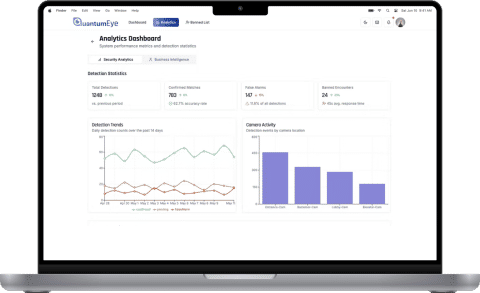

Scaling Edge AI & computer vision: QuantumEye real-time surveillance platform
Geniusee helped the QuantumEye AI platform that upgrades legacy CCTV with real-time detection, instant incident notifications, and decision-ready analytics.
Case details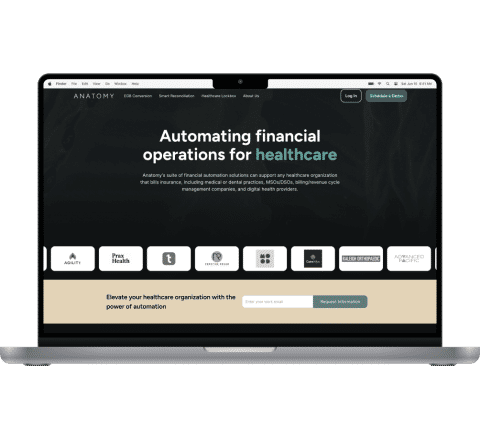
Anatomy Financial: Automated financial management software for healthcare
Anatomy introduces an innovative solution designed to automate document processing, compare various documents and banking transactions, and handle the intricacies of physical check processing. By conducting a thorough analysis, the system identifies discrepancies between the declared prices of medical procedures and the actual amounts received by the clinic.
Case details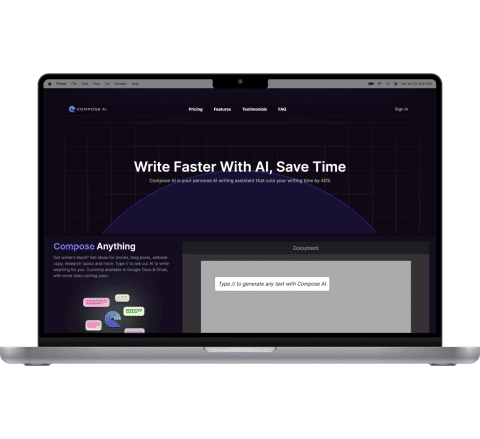
 Martech
Compose AI: Advanced content writing solution
We partnered with Compose AI to enhance their AI-powered writing platform through cloud migration, UX improvements, seamless integrations, and scalable feature development, upporting their growth from YC-backed startup to a widely adopted productivity tool.
Case details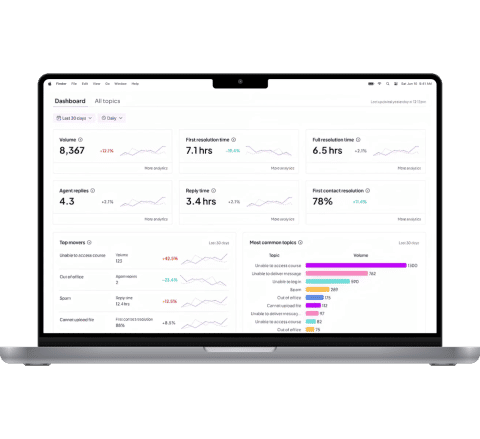
 Martech
Forethought: Enterprise AI agents for customer support
Forethought partnered with Geniusee to extend and integrate its AI-powered support platforms (Assist and Discover) into complex enterprise environments. We helped enhance real-time agent assistance, streamline multi-system connectivity, and deliver a unified support experience across channels. The result is a scalable AI agent ecosystem that accelerates resolution times, boosts team productivity, and powers more consistent customer experiences.
Case details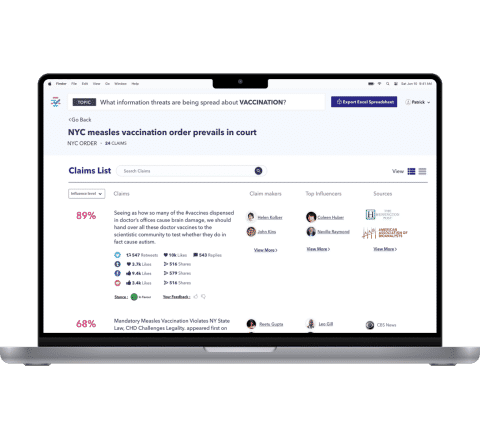

Enhancing FactMata’s AI to detect misleading content at scale
We partnered with Factmata to scale their AI platform for analyzing online content at volume, enhance data pipelines, and modernize their NLP models. Our team strengthened system performance, improved processing efficiency, and enabled Factmata to handle millions of records with higher accuracy and lower operational cost. By implementing our expertise in machine learning, natural language processing, and data analysis, we worked closely with FactMata to create web scrapers and optimize data pipelines and the project’s overall performance. The client addressed Geniusee to modernize their platform by combining real-time IoT data, AI analytics, and an intuitive user experience. The result: a scalable, secure, and analytics-driven ecosystem that helps enterprises make informed workspace decisions.
Case details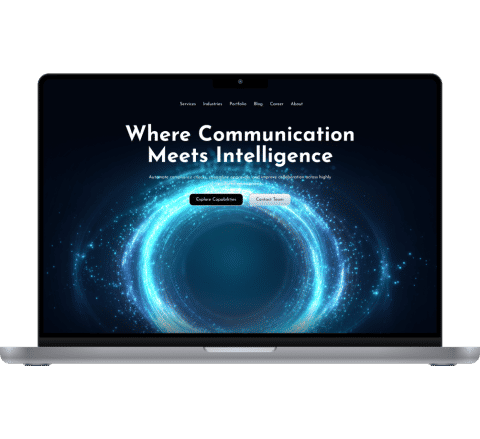
AI-driven-communication-assistant
Our client is a technology company specializing in providing services for industries with highly regulated communications. Their AI-based expertise allows to make those processes more simple. Geniusee was entrusted with migrating client’s infrastructure from Azure to Amazon, aiming to consolidate their crucial infrastructure in one place. The project involved migrating their database and leveraging Amazon services to optimize the system's scalability, security, and performance.
Case detailsTechnology stack we use
| Tool | How we use it |
| Cursor (on-premise option) | Primary agentic IDE; multi-agent parallel development; private deployments for regulated industries |
| Claude Code + Claude Code Skills | Full-codebase agentic tasks; project-specific Skills for code standards, testing, and API conventions |
| GitHub Copilot | AI unit test generation at file, class, and solution scope; TDD acceleration; automatic test recovery |
| LangChain / LlamaIndex | Custom AI solution pipelines and retrieval-augmented generation |
| OpenAI API / Claude / Gemini / Qwen / DeepSeek | LLM selection based on client use case, budget, and data-residency requirements |
| SonarQube / Bandit / Semgrep | Static code analysis; AI-generated code quality gates |
| GitHub Copilot / CodeWhisperer | Code generation and completion |
Fintech
Our AI models are trained on massive datasets to detect fraud, optimize investment portfolios, and improve customer service in finance.
Edtech
We build AI systems that can assess students’ work, provide personalized learning paths, and give intelligent feedback to boost learning outcomes.
Retail
For retailers, we offer AI solutions that analyze customer data to provide product recommendations, optimize pricing, and forecast demand to increase sales and operational efficiency.
Real estate
Property developers and real estate agents use our AI technology to determine optimal locations and the right time to buy or sell assets and gain data-driven insights into local housing markets.
Manufacturing
Predictive maintenance, automated quality control, and demand forecasting — built on your production line data. Our AI models flag equipment failure before it happens and catch defects faster than manual inspection ever could.
Logistics
Route optimisation, delivery forecasting, and real-time fleet tracking that runs on live operational data. Our AI systems cut delays and reduce costs without needing a human dispatcher to process every decision.
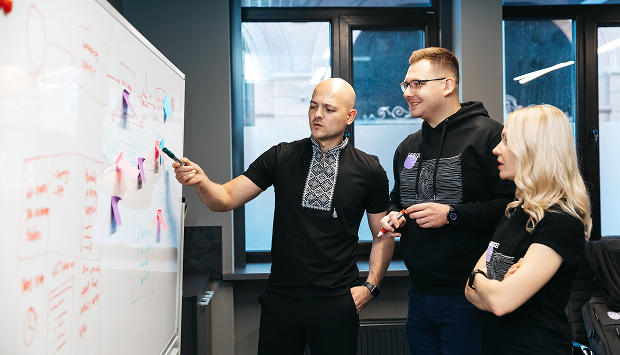
Genuisee’s versatile experience, gained over more than 8 years, has enabled us to form a team with a proven track record.
Your code stays yours
On-premise enterprises’ AI deployment for finance, healthcare, and regulated industries. Full AI-assisted development with zero code, leaving your infrastructure and a security audit trail that your compliance team will actually accept.
We don’t just write code. We write tests for it
Our Copilot-powered unit testing workflow generates, runs, and fixes test suites automatically, taking teams from under 50% coverage to production-grade quality without adding headcount or sprint time.
One AI agent isn’t enough
We run parallel autonomous AI agents in Cursor simultaneously (one refactoring, one handling test, one on UI), compressing sequential work into concurrent sprints. Concurrent agents remove it, and that’s where the 50% faster delivery actually comes from.
180+ projects development expertise
AI technologies don’t automatically improve bad processes — they accelerate them. Before we write a line of code, we audit your existing setup, identify where AI delivers real ROI, and configure the toolchain around your actual constraints.
PoC in weeks, not months
We use AI-enabled prototyping to validate your idea before you commit to a full build. A working proof-of-concept, with real architecture decisions, not throwaway demos, in under 3 weeks.
Find the drag before it costs you
We run AI-powered code analysis using SonarQube, Bandit, and Semgrep to surface security vulnerabilities, dead tests, and infrastructure waste. Most clients find that 15–25% of their infrastructure spend is recoverable.












Certified AWS Partner delivering secure, scalable cloud-native solutions.

ISO-compliant processes ensuring quality, security, and reliability.

Trusted integration partner for financial data connectivity and open banking.
Team of ISTQB-certified QA engineers for world-class software testing.

Consistently rated ★5.0 by clients for reliability and delivery excellence.

Accredited partnership supporting advanced testing and continuous QA automation.
Do I need to know which AI tools to use before we start mobile app development?
No, and we’d actually be cautious about any vendor that insists you do. Tool selection depends on your codebase size, your team’s existing workflow, your data-handling requirements, and your budget.
We run a scoping session before recommending any toolchain and starting our artificial intelligence development services. Sometimes Cursor is the right fit; sometimes Claude Code handles the heavy lifting better; often it’s both working in parallel.
We’re in a regulated industry and can’t let code leave our servers. Can you still use AI tools?
Yes. We configure Cursor with on-premise deployment for clients with strict data-residency requirements. Your code stays in your infrastructure, none of it is used to train external models, and your security team gets usage analytics and access controls. It’s the same artificial intelligence development speed without the compliance risk.
What’s the difference between using Copilot for autocomplete and what you’re describing?
Autocomplete and agentic AI test generation are different things. Standard Copilot autocomplete suggests the next line of code. What we use for AI unit testing is a purpose-built agent that analyses your entire codebase, generates a test suite, runs it, identifies failures, fixes them, and reruns — without a developer driving each step.
The output is tested, passing code rather than suggestions that still need to be written and validated manually.
We already have developers. Why would we pay an agency to use AI tools we could set up ourselves?
You could set them up yourself — the question is whether it’s a good use of your engineering team’s time. Configuring Cursor for enterprise deployment, building Claude Code Skills specific to your codebase conventions, and establishing Copilot testing workflows that your team will actually use all take meaningful effort to do correctly. We’ve done it across multiple client projects.
We can get your team productive in weeks rather than the months it typically takes to figure out the configuration details through trial and error.
How do you handle AI-generated code quality? What stops the AI from introducing bugs?
We don’t treat AI output as correct by default — that’s the wrong mental model. We use SonarQube, Bandit, and Semgrep as quality gates on all AI-generated code, and Copilot’s unit testing agent runs automatically, so failures surface before they reach review.
Our senior AI engineers review diffs the same way they’d review any junior developer’s pull request. AI compresses the time it takes to produce a first draft; human review still owns correctness.
Can you integrate AI into our existing app rather than building from scratch?
That’s actually the more common engagement. Most clients come to us with a working product and a specific problem: test coverage is too low, infrastructure costs are too high, they want to add a chatbot or predictive feature, or they’ve inherited a codebase nobody fully understands.
We run an AI audit first, identify where AI tooling provides the clearest ROI, and integrate from there. A full rebuild is rarely the right answer.