
About the client
Alvarez & Marsal (A&M) is a global enterprise-level consulting company specializing in turnaround management, performance improvement, and advisory services. Founded in 1983, the firm provides expertise in restructuring, operational excellence, and strategic consulting across various industries. A&M is known for working with clients during critical transitions, helping them address complex challenges and achieve sustainable growth.
Business context
Alvarez & Marsal approached Geniusee to support a logistics optimization initiative for one of their end clients. The client, a large logistics service provider, faced operational inefficiencies in dispatching, load scheduling, and route optimization. These inefficiencies led to inflated costs, underutilized resources, and delayed deliveries.
The mission was to craft a customized logistics management solution that could streamline planning, automate load assignments, and enable smarter data-driven decisions using real-time data insights.
An inefficient centralized system for dispatchers to manage real-time logistics
Inconsistent route planning due to reliance on manual coordination
A legacy backend system with an unoptimized codebase
A niche database technology (TigerGraph) with limited global expertise
Solutions we implemented
Our approach was specifically tailored to the client’s existing TigerGraph-based architecture, where we needed to support custom graph queries and complex logistical relationships.
Following a Kanban methodology, our team delivered an end-to-end system refactoring that included the following services and steps:
- A comprehensive data management system
We built and fine-tuned a suite of asynchronous, multithreaded ETL data pipelines based on output quality. This helped us automate logistics data processing and significantly reduce data handling time. - Interactive visualization map
We elaborated upon Ogma.js-based solution to develop a driver dispatch map, allowing users to track trips in real time and visualize route data in a friendly and intuitive way. - Streamlining load scheduling
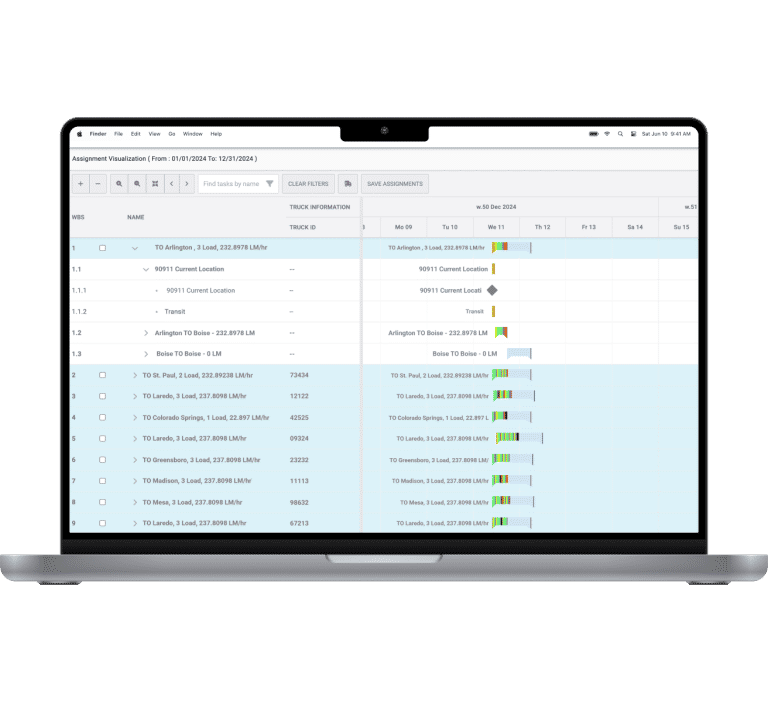
We developed an advanced solution to optimize load assignments and delivery routes, reducing manual coordination and improving resource efficiency. This included building interactive load scheduling and assignment visualization pages that allowed dispatchers to quickly assess available capacity, match loads with drivers, and view routes in real time. We aimed to minimize vehicle usage and driving time without compromising delivery accuracy. - Admin panel for real-time oversight
To ensure a holistic and centralized logistics control, our team elaborated dispatcher dashboards, which facilitated the management of the drivers’ schedules. Moreover, these dashboards impacted the aligned communication between teams. - Performance optimization
To enhance system performance and reduce execution time for data-heavy operations, we implemented a combination of asynchronous task execution, multithreading, and multiprocessing.





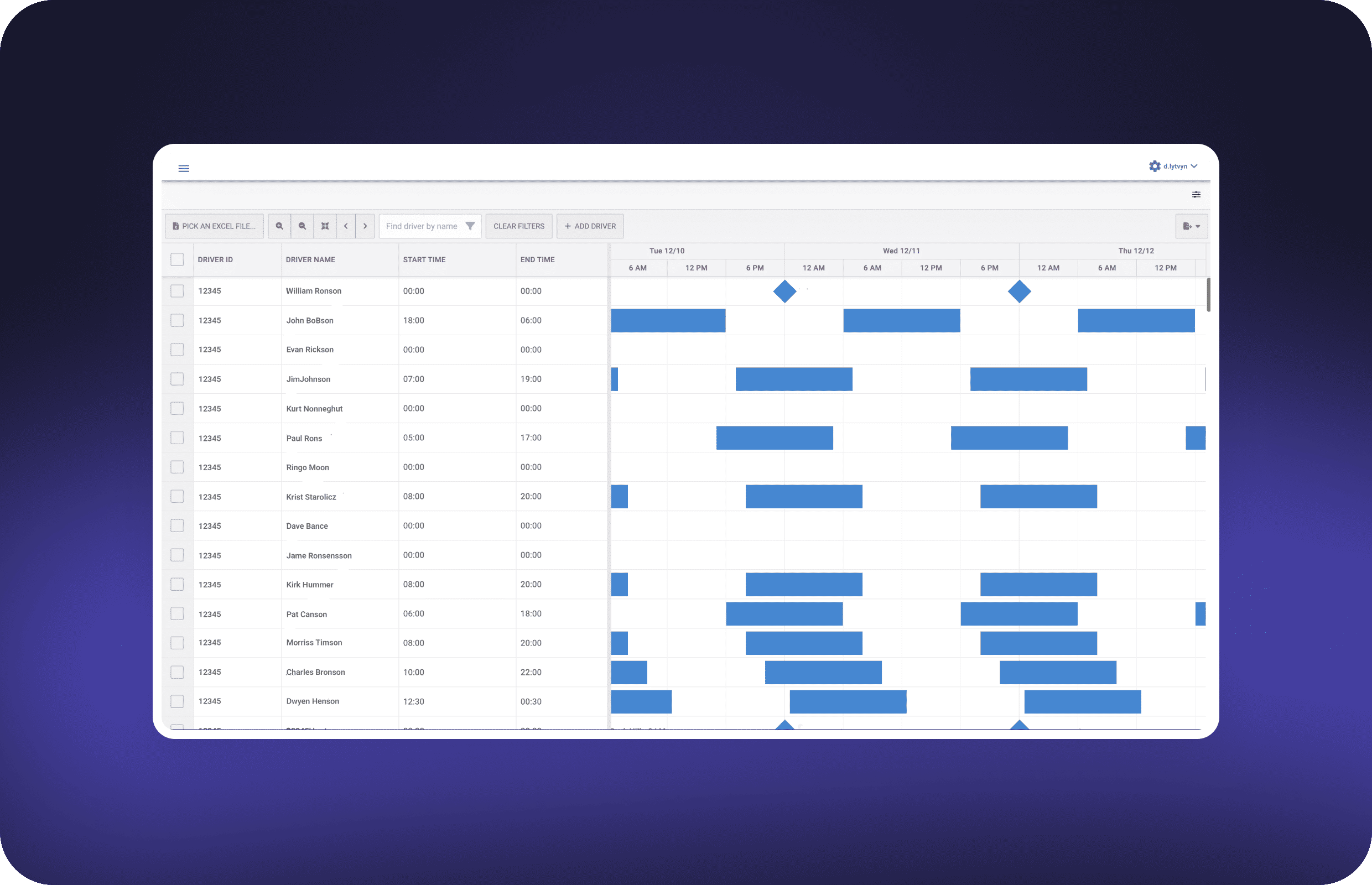
KPI monitoring and analytics
- route optimization performance and delivery precision
- total mileage per driver over customizable periods
- load completion rates
- downtime and idle time analysis
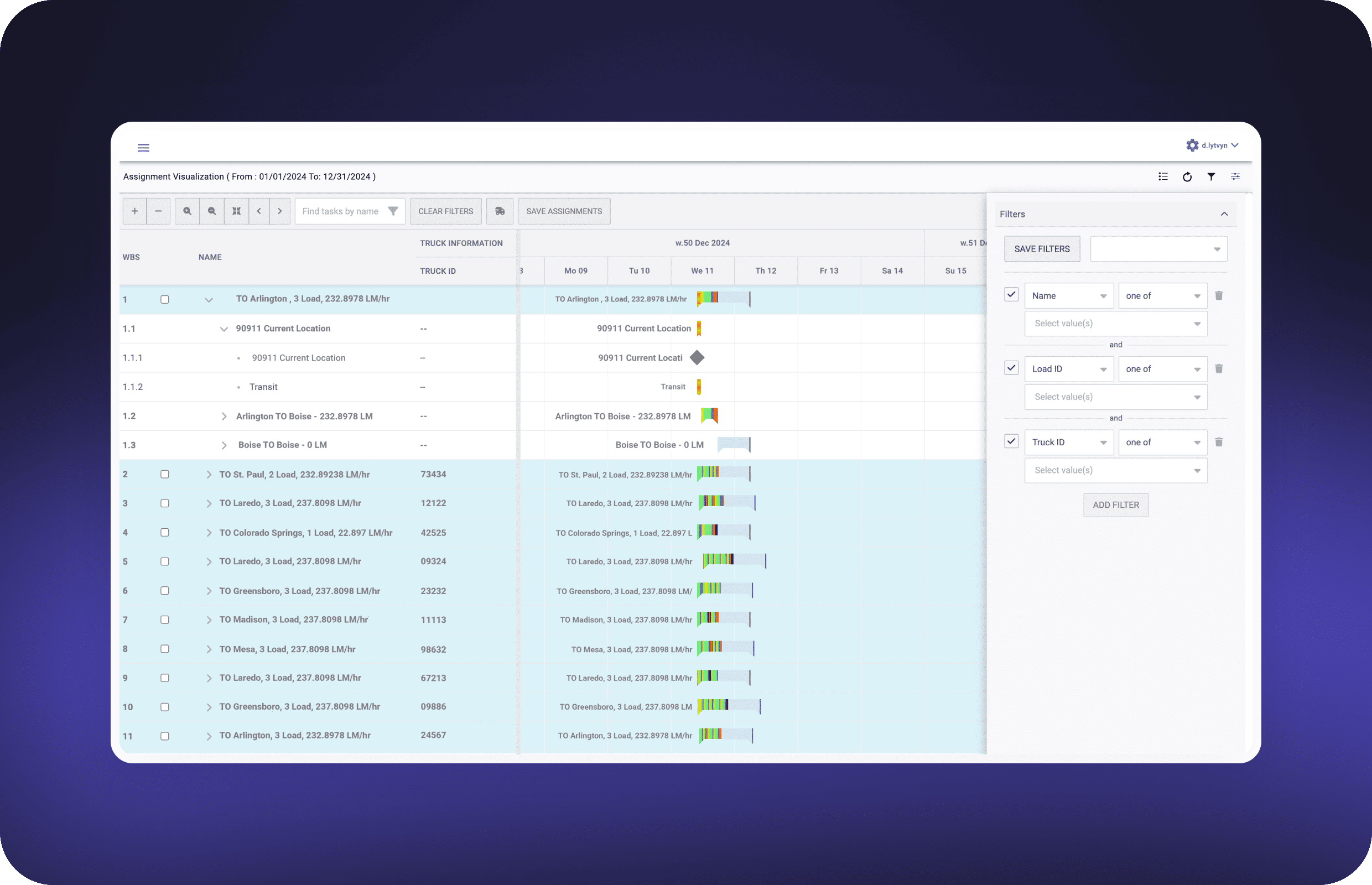
Dispatcher dashboards
- route updates and Ogma.js-based map
- active and pending delivery statuses
- real-time location tracking and mileage per driver
- driver’s working hours, vacations, etc
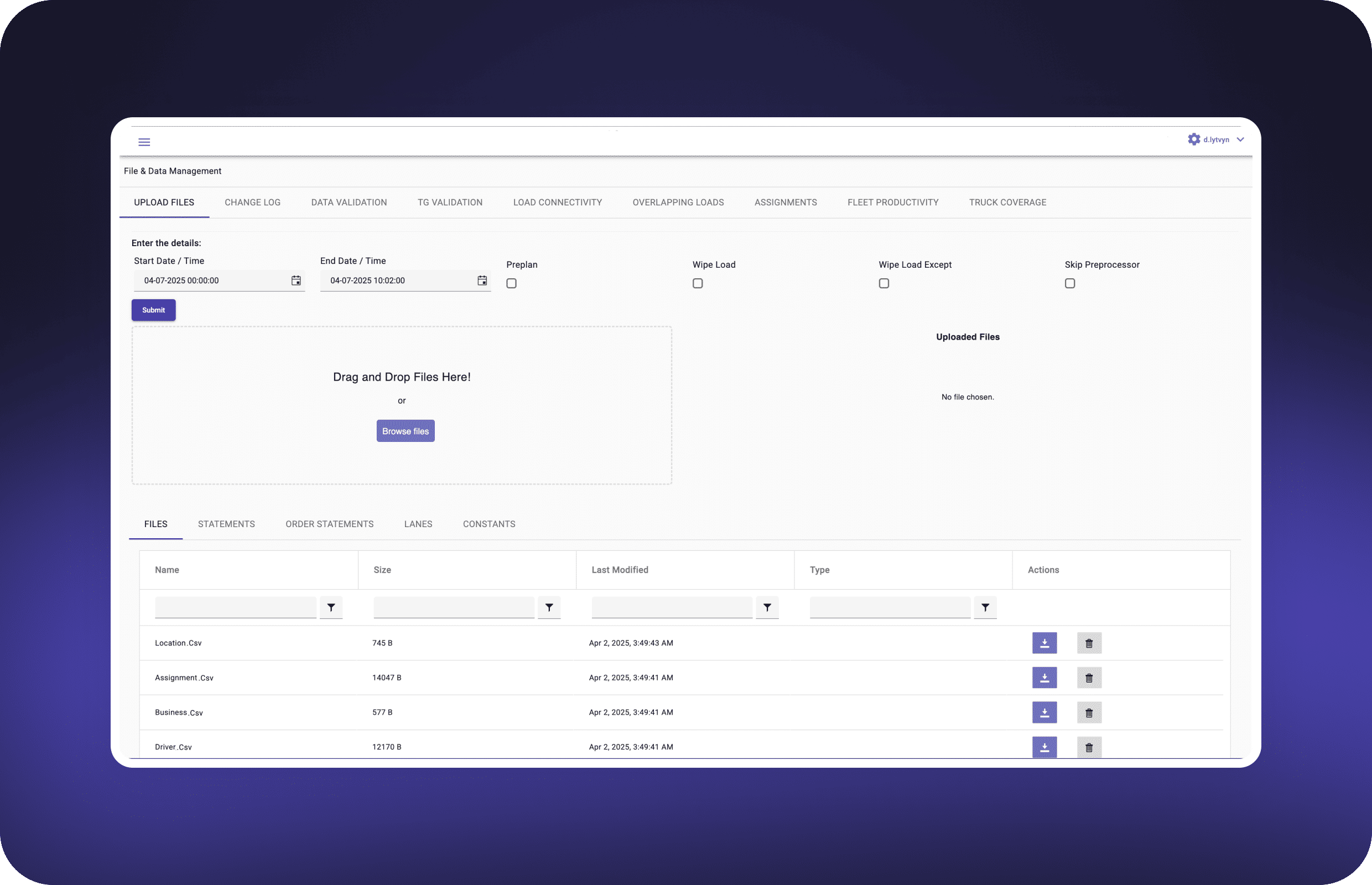
File management page
- historical data analysis
- bulk data uploads
- data updates
- trip records & load requests
Geniusee’s tailored solution delivered measurable improvements that directly addressed key operational pain points. By enhancing data processing, logistics coordination, and dispatcher oversight, the system brought lasting business value to the client.
50% reduction in ETL processing time (from 7 min to ~3 min).
Estimated 10–20% decrease in daily fleet usage based on improved route logic.
Enhanced visibility and control for dispatchers, leading to faster decision-making and better resource allocation.