About the client
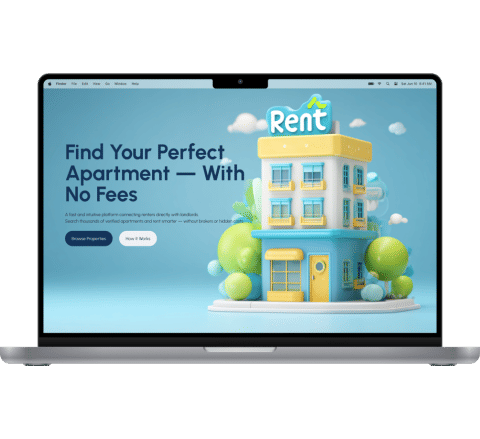
Happy House is a next-generation rental property management platform designed to modernize the entire renting experience. It unites tenants, landlords, and agents within one seamless digital ecosystem. The platform replaces manual paperwork with digital contracts, e-signatures, and automated payment flows that streamline every step of the rental journey. Tenants can search for properties, book viewings, manage documents, and track payments directly in the app. Landlords gain full visibility into applications, property activity, financial operations, and tenant interactions. Communication becomes effortless through built-in real-time messaging tools that connect all parties. Happy House automates critical processes such as rent collection, deposit handling, and approval workflows, significantly reducing administrative overhead.
Business context
The client reached out to us, seeking an experienced technical team to strengthen the in-house team and deliver full-scale development of the rental property management software. Our great competitive advantage was deep expertise in different frameworks, especially React and integration services. We also helped our client with SEO optimization for the property management app, which is quite unusual, as typically, this process is handled by the in-house team.
Key challenges:
- Integrate multiple frameworks together and ensure a smooth workflow
- Handle payments and integrate them with the main system
- Align the delivered results of frontend development with the main system and infrastructure
Kanban
Our team used an adaptive Kanban system, customized for Crave Retail’s workflow. With a structured backlog and continuous delivery, we rolled out new iterations quickly and efficiently.
Flexible frameworks
To ensure lightning-fast response with minimal cost and effort, we relied on highly flexible frameworks and libraries. This approach allowed us to evolve features on the fly while keeping performance high and aligned with our clients’ strategic goals.
A/B testing
We focus on creating products end users genuinely love. To ensure this, we conduct UX research and run A/B tests across key features, using real user behavior to guide final implementations and iterative improvements.
Sustained revenue impact
We connected existing system components with newly tailored functionality through efficient routing, while integrating multiple third-party services to extend capabilities. Our team also built custom modules to personalize and enhance key parts of the platform.
Solutions we implemented
We worked closely with the client’s in-house team. Our team rebuilt specific system components from scratch and integrated them. Some services, such as UI/UX design for rental management software, were delivered from the client’s side. Our primary focuses were frontend development and multiple system integrations aimed at smoothing digital processes (ensuring a secure workflow, allowing users to pay and collect rent, managing content, and more). We also provided backend development services and tailored the architecture and infrastructure of the system. Additionally, the Geniusee team assisted with the development of the admin panel and further improvements.
Frontend development
We rebuilt key parts of the system from scratch and connected them seamlessly with existing modules, ensuring zero disruption for end users. The web application, built on React and rendered client-side, uses Context JS libraries to power features like e-commerce adapters, chat, and notifications. The landing page was developed with Next.js to enhance performance and SEO, and the entire frontend was wrapped with Firebase to streamline authorization and data handling.
Backend development
The backend is powered by Java as the core technology and supported by Node.js for auxiliary services. We connected the backend with Next.js for optimized server-side rendering and ensured high performance, scalability, and real-time responsiveness. Using the Spring framework as the Java IoC container allowed us to deliver a stable, robust, and adaptable backend environment.
Architecture & infrastructure
We tailored a scalable architecture using Infrastructure as Code via Terraform to automate provisioning and improve development cycles. The frontend operates on AWS serverless architecture, while the backend runs on a scalable AWS ECS Fargate cluster. We also built a monolithic base for the help center and blog to support consistent content delivery across the platform.
Integration services
Our team carefully stitched together rebuilt and legacy system components without affecting the end-user experience. Using routing-based transitions, we ensured stable communication between new and existing modules, including chat adapters, admin systems, and transactional flows. These integrations enabled secure workflows, smooth content management, rent payment processing, and a cohesive user journey across the entire application.
Frontend

Frontend infrastructure



Backend infrastructure



Infrastructure as a code

CI/CD


Tenant panel
Tenants can browse listings, book viewings, e-sign documents, and set up automated rent payments via Plaid. The platform also posts ads on major rental sites, eliminating fees for agents and deal-makers.
Admin panel
We connected and customized the web app’s admin, blog, and support center. Our team expanded CMS capabilities (Sanity.io) and added key features to streamline property approvals and content management.
App accounts section
This section organizes transactions by category, type, and timestamp, allowing users to track expenses directly in the app without relying on external banking tools for spending insights.
Landlord panel
Landlords can manage property listings, schedule visits, assign agents, vet tenants, and chat in real time. Digital contracts, e-signing, and automated rent and deposit collection reduce operational costs and boost rental income.
Unified rental ecosystem
A platform that connects tenants and landlords, revolutionizing the rental industry
Fully digital property management
Digitation of tenant and property management systems
Scalable infrastructure foundation
Scalable monolithic architecture and infrastructure as a code
Personalized system integrations
Multiple third-party integrations with hand-written modules aimed at system personalization