
Swarm is ideal for small-to-medium organizations or teams seeking lightweight yet powerful container orchestration.
Our case studies
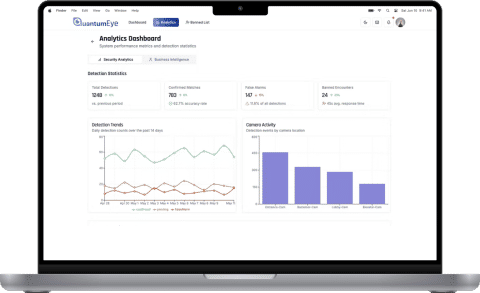

Scaling Edge AI & computer vision: QuantumEye real-time surveillance platform
Geniusee helped the QuantumEye AI platform that upgrades legacy CCTV with real-time detection, instant incident notifications, and decision-ready analytics.
Case details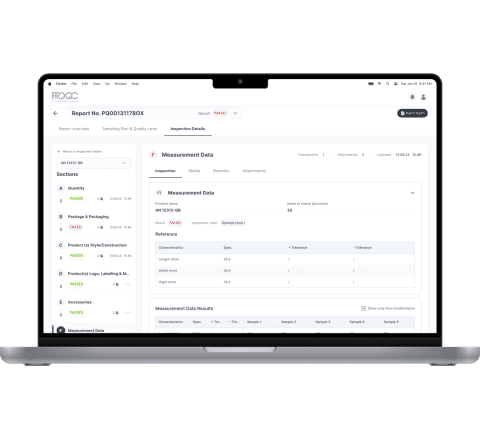
 Logistics
Pro QC: Streamlining inspections and audits with modern technology
As a long-standing provider of inspection and supplier management services, Pro QC supports clients in over 88 countries with product, factory, and process evaluations. Their global reach created operational complexity that legacy, document-based workflows could no longer handle efficiently. To improve accuracy and streamline work across regions, Pro QC engaged Geniusee to design a digital system that replaces manual processes with structured, scalable workflows.
Case details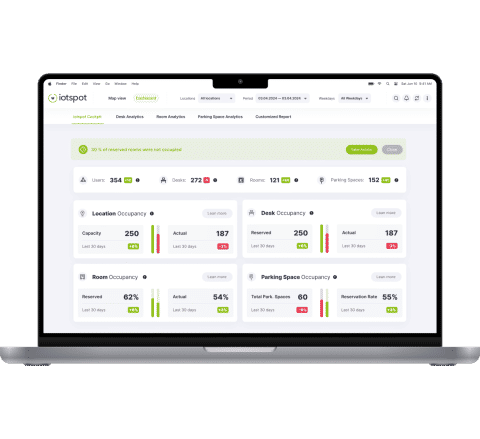
 Real estate
How Geniusee helped iotspot optimize hybrid workplaces with AI and IoT analytics
iotspot is a Dutch technology company focused on enabling hybrid workplaces through IoT-powered data intelligence. Iotspot helps enterprises track workspace usage, air quality, and employee movement to design more efficient, sustainable offices. The client addressed Geniusee to modernize their platform by combining real-time IoT data, AI analytics, and an intuitive user experience. The result: a scalable, secure, and analytics-driven ecosystem that helps enterprises make informed workspace decisions.
Case details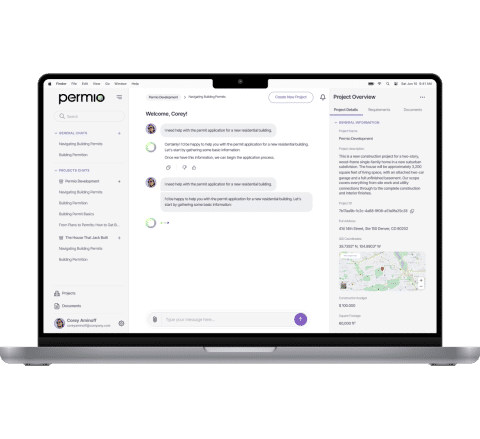
Permio: AI-powered permit workflows for Service First Permits
Permio is an AI-powered permitting platform built for Service First Permits to automate workflows and accelerate approvals across 240+ jurisdictions. Geniusee worked closely with SFP to design, engineer, and validate a system that modernizes the entire permitting lifecycle.
Case details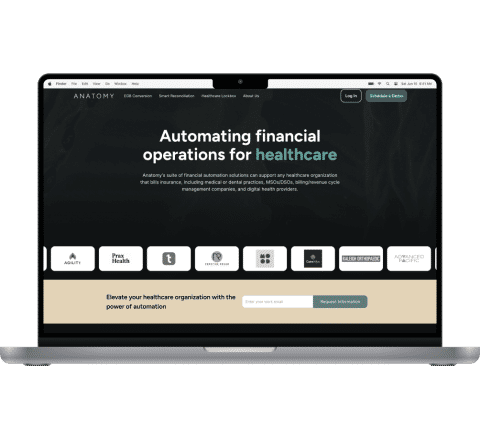
Anatomy Financial: Automated financial management software for healthcare
Anatomy introduces an innovative solution designed to automate document processing, compare various documents and banking transactions, and handle the intricacies of physical check processing. By conducting a thorough analysis, the system identifies discrepancies between the declared prices of medical procedures and the actual amounts received by the clinic.
Case details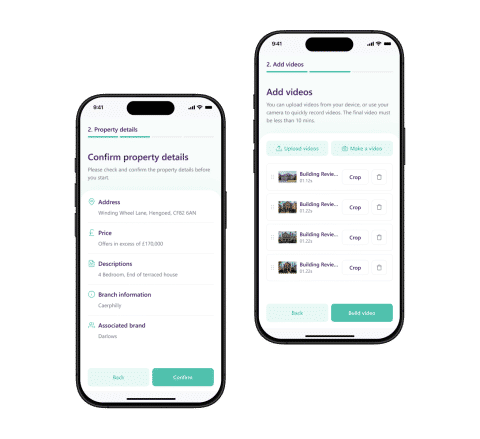
 Real estate
Spicerhaart: How Genuisee helped accelerate branded property tour videos
Spicerhaart Group Ltd is one of the UK's largest independent estate agency networks, operating 7 well‑known brands across residential sales, lettings, and financial services. Geniusee delivered a mobile video solution that simplifies property marketing: agents can capture, enhance, and publish fully branded property tours in minutes, with seamless CRM integration and automated brand consistency.
Case details1 step – Cluster architecture & setup
Design and configure secure, scalable Swarm clusters tailored to your workloads.
2 step – Containerization & service deployment
Containerize apps and deploy them as manageable services across distributed nodes.
3 step – Load balancing & networking
Implement service discovery, routing mesh, encrypted networks, and failover strategies.
4 step – Monitoring & performance optimization
Track cluster health, improve resource usage, and automate recovery workflows.
5 step – Ongoing support & enhancements
Maintain, upgrade, and expand your Swarm environment as your business scales.
24/7 support
We guarantee uninterrupted operations and smooth deployment cycles with proactive monitoring and assistance.
Metrics-driven approach
Every cluster is optimized for performance, scalability, and measurable results.
Experienced cloud-native engineers
Our specialists bring deep experience in Docker, orchestration, and distributed systems.
Agile collaboration
Cross-functional teams adapt to evolving needs and keep projects aligned with your goals.







How does Docker Swarm differ from Kubernetes?
Docker Swarm offers a simpler, more lightweight orchestration model, making it ideal for teams that want minimal setup and easier management. Kubernetes provides deeper functionality and extensibility but comes with a steeper learning curve and more operational overhead. Many organizations choose Swarm when they need fast deployment, easy scaling, and native Docker integration without complex infrastructure requirements.
Can Docker Swarm work in hybrid or multi-cloud environments?
Yes, Docker Swarm can coordinate clusters across on-premises servers, private clouds, and public cloud providers. Its overlay networks and built-in encryption help maintain consistent communication between nodes in distributed environments. Geniusee often designs hybrid setups to support disaster recovery, compliance needs, and flexible scaling strategies.
Can you help us migrate from a non-containerized or monolithic system to Docker Swarm?
Yes, we guide teams through application decomposition, containerization, and staged rollouts to ensure smooth migration. The process typically includes architectural assessment, Dockerfile creation, service design, and orchestration planning. We also help implement CI/CD pipelines so that deployments become automated and consistent.
How does Docker Swarm handle scaling under unpredictable loads?
Swarm makes horizontal scaling seamless, allowing services to expand or contract based on demand. Autoscaling isn’t native, but it can be implemented using monitoring tools, alerting systems, or custom automation scripts. Geniusee configures monitoring-driven scaling mechanisms that maintain performance without over-provisioning.
Does Docker Swarm support zero-downtime deployments?
Yes, Swarm provides rolling updates that replace containers gradually, ensuring continuous availability. Update policies can be customized with health checks, restart parameters, and rollback strategies to avoid service disruption. Our experts fine-tune these parameters so updates feel invisible to end users.
What tools can be integrated with Docker Swarm for better observability?
Swarm works well with tools like Prometheus, Grafana, ELK/EFK stacks, and Datadog for metrics, logs, and alerting. These tools help visualize cluster performance, detect anomalies, and automate recovery processes. Geniusee integrates and configures these observability stacks to give teams full operational transparency.