About the client
The client is a long-established U.S. education provider offering personalized tutoring, academic support, and test preparation services across a nationwide network of learning centers. Founded in the late 1970s, the organization specializes in individualized learning plans, subject-specific instruction, and standardized exam readiness. Their programs combine in-center and online formats, helping students of all ages improve academic performance, confidence, and long-term learning outcomes.
Business context
A client approached us to develop a modern educational platform that not only enhances learning through personalized approaches and interactive tools but also consolidates assessment and learning material management. This system aims to replace external services, streamlining scheduling, planning, and data management to support individual student needs and improve collaboration, and provide a distraction-free working space for students within an online learning platform.
Integrating diverse educational tools and content into a seamless virtual classroom experience
Ensuring the platform is scalable and adaptable for potential adoption by other educational institutions
Maintaining low latency and high reliability for live interactions during online sessions
Solutions we implemented
The project workflow was structured around Scrum practices, emphasizing collaboration and iterative progress. To maintain alignment and adapt to changes, we conducted regular ceremonies, including sprint planning, daily stand-ups, and retrospectives. Discussions and close communication with developers, business analysts, and stakeholders were central to the process, ensuring clarity and timely feedback.
- Comprehensive LMS integration. Our team is currently elaborating upon the unified learning management system with enhanced chatbot functionality and sophisticated student prioritization algorithms. This integration is aimed at streamlining the educational process by consolidating various learning tools into a single, easy-to-navigate platform.
- Advanced real-time session capabilities. We developed a custom media soup SFU specifically tailored to the educational sector’s needs, supporting stable and efficient audio/video conferencing. This setup was designed to handle multiple participants simultaneously, ensuring smooth and interactive online sessions akin to physical classroom experiences.
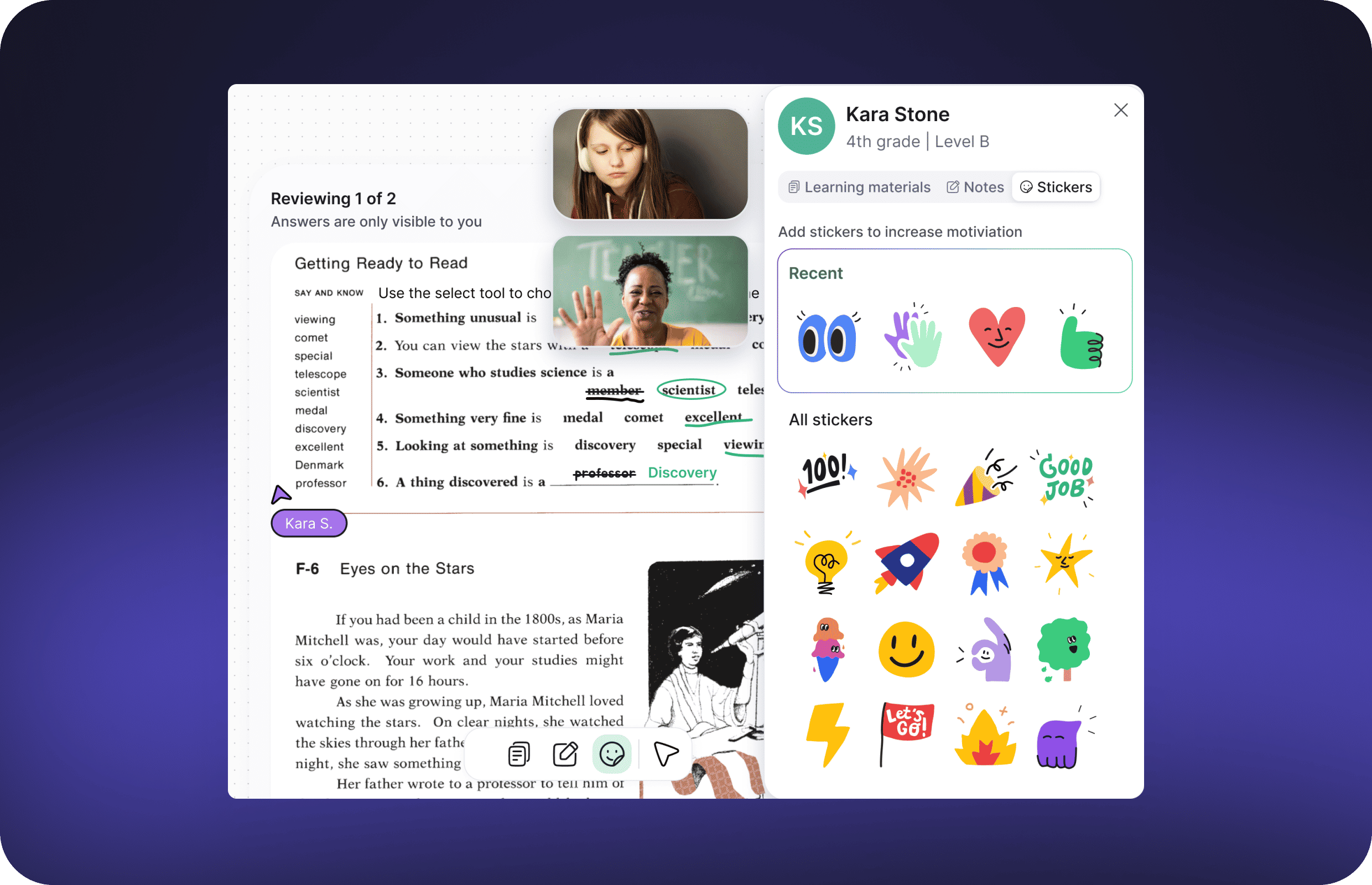
- Interactive whiteboard development. Utilizing Fabric.js, we created a highly interactive whiteboard that supports real-time drawing, custom shapes, annotation, and the integration of custom educational content. This tool enables students and tutors to collaborate effectively in real time, enhancing the learning experience by allowing instant feedback and interactive lessons.
- Incorporation of real-time updates. We implemented WebSockets to provide real-time updates and enable interactive communication between students and tutors. This setup facilitates immediate feedback and lively interaction, mirroring the responsiveness of face-to-face classroom engagement.
- LMS admin panel development. We designed a specialized LMS admin panel to streamline session and user management. It allows educators and administrators to efficiently organize and monitor educational sessions, enhancing the overall management of the virtual classroom. It also supports detailed user activity tracking, helping administrators oversee and optimize the educational process.

Interactive whiteboard
- PDFs, images, and other visual aids on the whiteboard
- Real-time drawing and annotation
- Custom shape creation and manipulation
- Interactive educational content like illustrations, stickers, and confetti poppers
- Undo/redo functionality
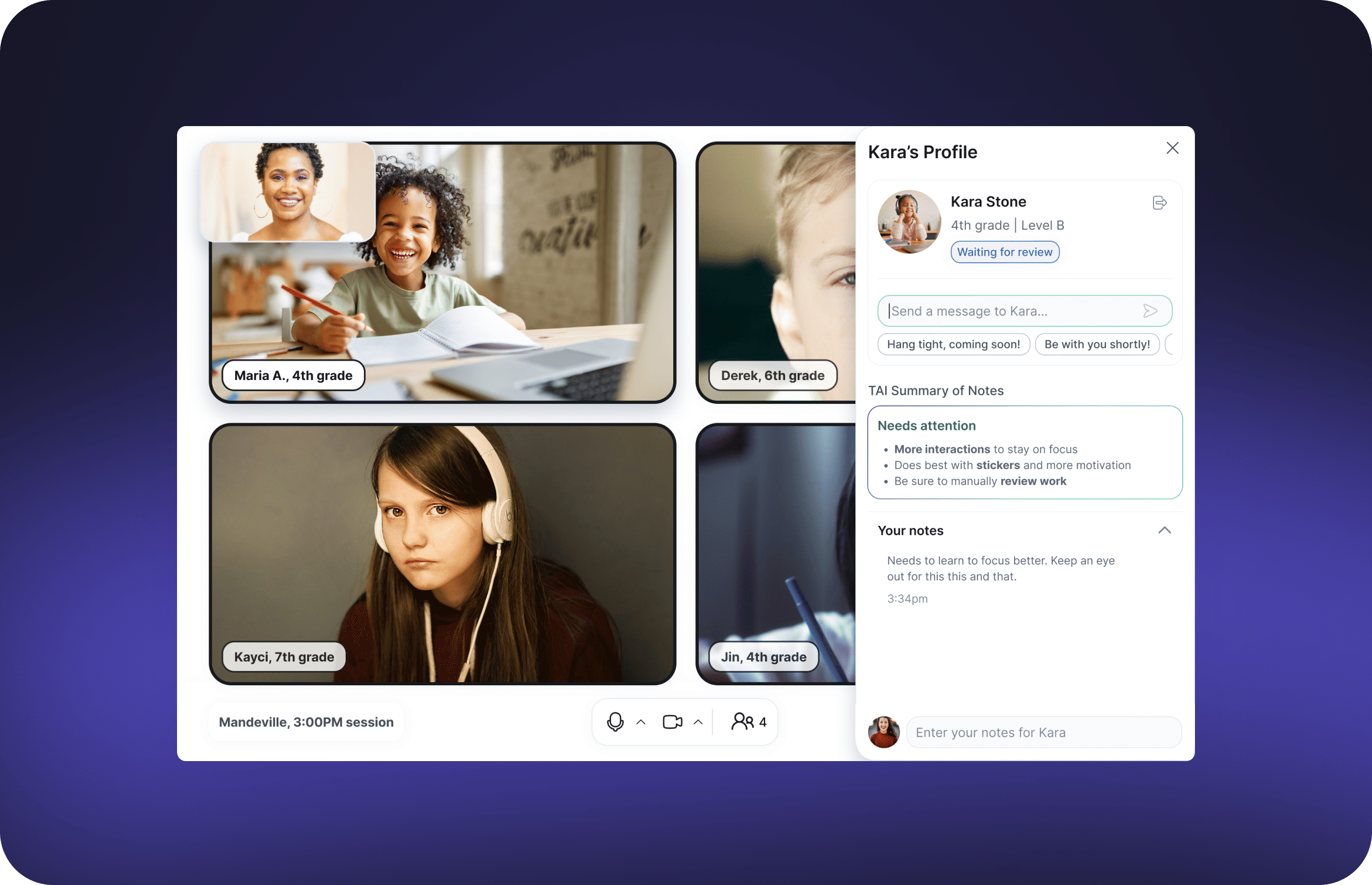
Real-time communication
- Instant feedback between students and tutors
- Video and audio calls using MediaSoup SFU
- Low-latency communication for effective collaboration
- Live updates on the whiteboard and other features
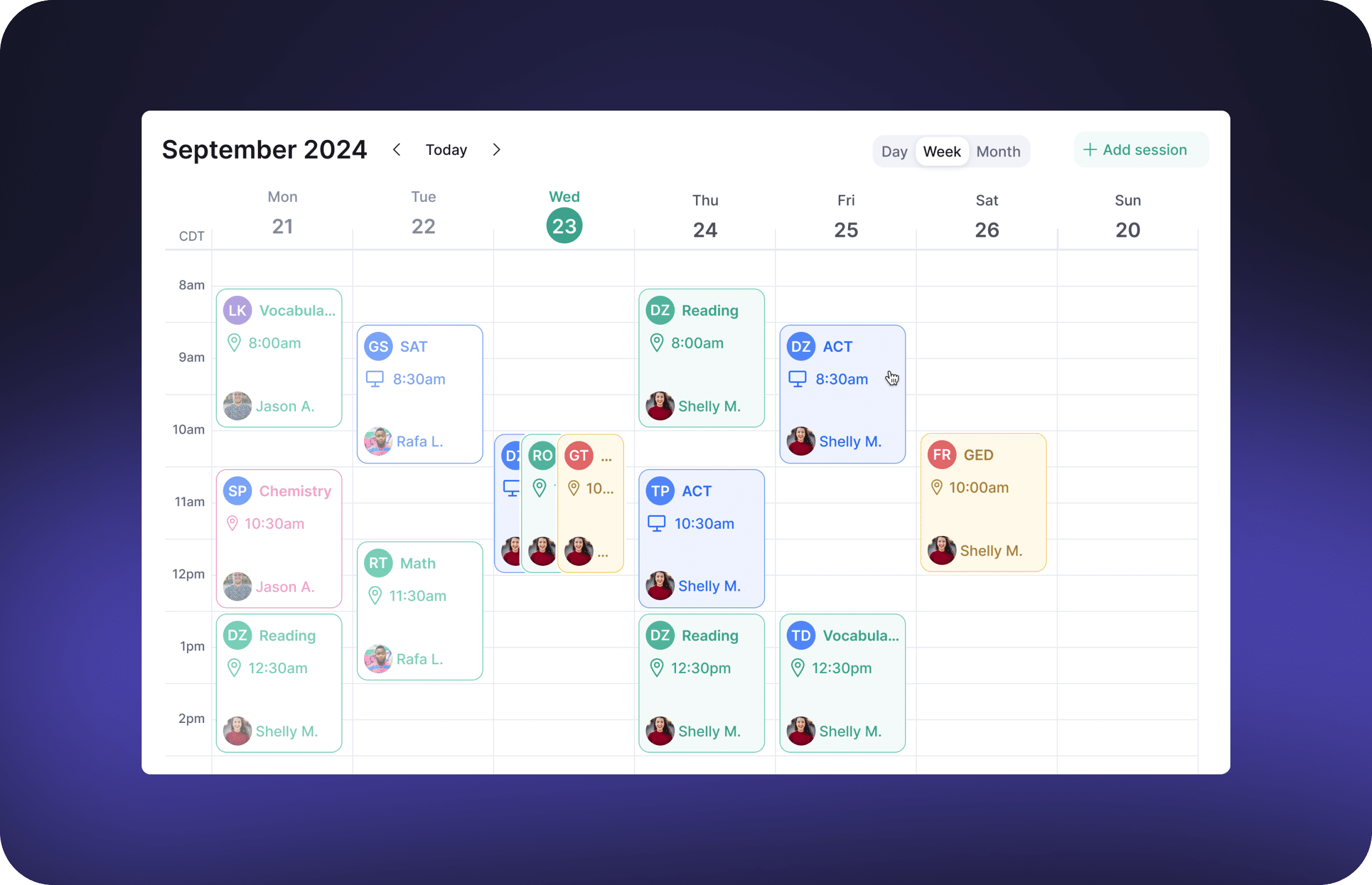
Admin panel
- User creation and monitoring
- Tools for session management
By aligning closely with the client’s vision and adapting our methodologies to meet their specific needs, we crafted a highly customized virtual learning platform. This platform significantly enhances the educational experience for both tutors and students by addressing the unique challenges of virtual classrooms. Here are key achievements:
Intuitive dashboard design
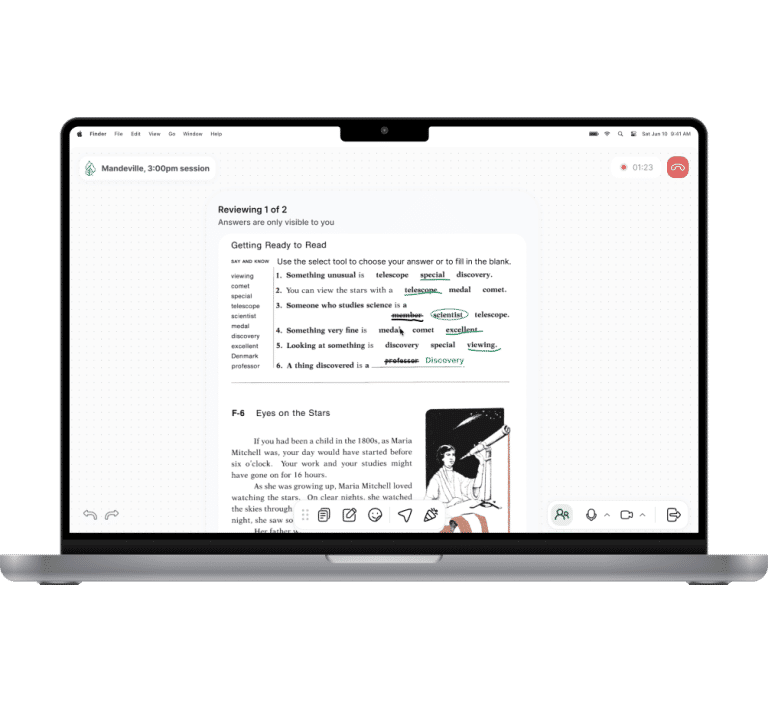
We designed a user-friendly dashboard with tools like a pencil, eraser, and other interactive elements. These tools mimic the traditional classroom experience, ensuring that tutors and students can seamlessly engage in real-time, even in a virtual setting.
Collaborative features
Understanding the importance of interaction in education, we integrated a submission process that allows both tutors and students to exchange work efficiently. This feature ensures smooth collaboration and timely feedback, fostering an engaging learning environment.
Flexible QA process
We implemented a customized QA workflow to ensure platform reliability and a smooth user experience. Using Jira, we adapted workflows to track education-specific issues such as tool responsiveness, dashboard performance, and submission behavior. In TestLodge, we organized detailed test cases and scenarios to validate tool accuracy, user interactions, and data consistency throughout the platform.
Scalability for educational needs
Recognizing the diverse requirements of different learning centers, we designed the platform to accommodate varied class sizes, tool configurations, and session structures. This scalability ensures the system remains effective for centers of all sizes.
Obstacles Genuisee encountered
- Real-time interactivity proved to be a significant challenge, particularly in implementing seamless video conferencing and interactive whiteboard functionality. These features required high performance, low latency, and reliable synchronization, which were difficult to achieve within the technical constraints.
Resolution: We tackled these issues by optimizing our architecture for real-time data transmission, integrating robust third-party tools for video and whiteboard features, and conducting extensive testing to ensure performance and synchronization met user expectations.
- We encountered difficulties in defining test scenarios and cases due to unclear and frequently changing product requirements, which complicated the development process. Additionally, gaps in technical specifications made it challenging to determine expected testing outcomes.
Resolution: We improved planning and communication by fostering close collaboration with developers, BA, and stakeholders, implementing Scrum practices such as ceremonies, task management, and estimations. To enhance documentation, we developed a comprehensive test plan, selected an appropriate testing strategy, and worked on risk management by creating additional boards and filters to assess risks and their impact on the project.