

Cucumber is ideal for teams building complex software that requires rich communication and automated testing.
Our case studies
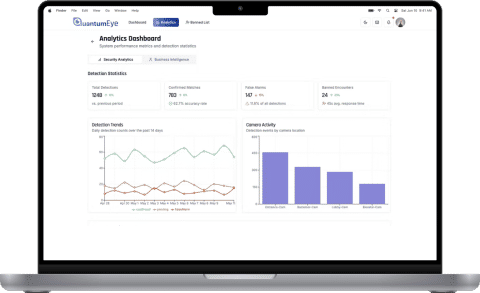

Scaling Edge AI & computer vision: QuantumEye real-time surveillance platform
Geniusee helped the QuantumEye AI platform that upgrades legacy CCTV with real-time detection, instant incident notifications, and decision-ready analytics.
Case details
 Logistics
Pro QC: Streamlining inspections and audits with modern technology
As a long-standing provider of inspection and supplier management services, Pro QC supports clients in over 88 countries with product, factory, and process evaluations. Their global reach created operational complexity that legacy, document-based workflows could no longer handle efficiently. To improve accuracy and streamline work across regions, Pro QC engaged Geniusee to design a digital system that replaces manual processes with structured, scalable workflows.
Case details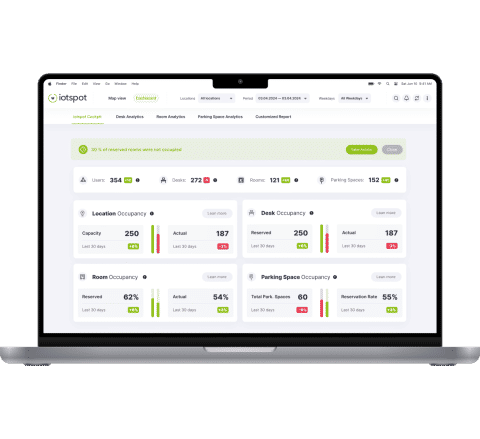
 Real estate
How Geniusee helped iotspot optimize hybrid workplaces with AI and IoT analytics
iotspot is a Dutch technology company focused on enabling hybrid workplaces through IoT-powered data intelligence. Iotspot helps enterprises track workspace usage, air quality, and employee movement to design more efficient, sustainable offices. The client addressed Geniusee to modernize their platform by combining real-time IoT data, AI analytics, and an intuitive user experience. The result: a scalable, secure, and analytics-driven ecosystem that helps enterprises make informed workspace decisions.
Case details
Permio: AI-powered permit workflows for Service First Permits
Permio is an AI-powered permitting platform built for Service First Permits to automate workflows and accelerate approvals across 240+ jurisdictions. Geniusee worked closely with SFP to design, engineer, and validate a system that modernizes the entire permitting lifecycle.
Case details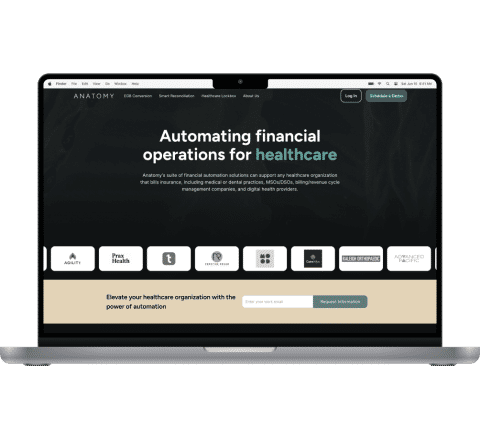
Anatomy Financial: Automated financial management software for healthcare
Anatomy introduces an innovative solution designed to automate document processing, compare various documents and banking transactions, and handle the intricacies of physical check processing. By conducting a thorough analysis, the system identifies discrepancies between the declared prices of medical procedures and the actual amounts received by the clinic.
Case details
 Real estate
Spicerhaart: How Genuisee helped accelerate branded property tour videos
Spicerhaart Group Ltd is one of the UK's largest independent estate agency networks, operating 7 well‑known brands across residential sales, lettings, and financial services. Geniusee delivered a mobile video solution that simplifies property marketing: agents can capture, enhance, and publish fully branded property tours in minutes, with seamless CRM integration and automated brand consistency.
Case detailsOur specialists help businesses adopt BDD and Cucumber in a structured, scalable way, utilizing the Cucumber support feature.
1 step – BDD process setup
Introduce BDD methodology, define acceptance criteria practices, and align teams.
2 step – Test automation framework development
Build advanced Cucumber-based frameworks with CI/CD integration and easy-to-understand feature files.
3 step – Scenario and feature development
Write and optimize Gherkin scenarios covering realistic user behaviors in plain English.
4 step – Integration with test tools
Connect Cucumber with Selenium, Appium, Playwright, REST Assured, and more.
5 step – Ongoing support & enhancement
Maintain test suites, improve coverage, and evolve the BDD workflow.
Industry-recognized QA expertise
As a Clutch-rated partner, Geniusee is trusted for delivering reliable QA and automation services, ensuring you’re working with a high-performing team focused on software quality.
Full-cycle testing capabilities
We support more than just Cucumber, offering automation, security, performance, functional, and regression testing.
Strong delivery record
With 220+ experts, 70+ tech services, and 180+ successful projects, test cases and frameworks, our results speak for themselves.
Cross-industry testing experience
We’ve implemented BDD and automation for FinTech, Healthcare, e-Commerce, SaaS, Telecom, and IoT products.








Does Cucumber require developers and QA to know programming?
Cucumber scenarios are written in plain Gherkin, so non-technical team members can contribute easily. However, implementing step definitions and automation frameworks does require programming skills.
Can Cucumber be integrated into an existing testing framework?
Yes, Cucumber tests run smoothly in CI/CD tools like Jenkins, GitLab, GitHub Actions, or Azure DevOps, enhancing software development workflows. Automated execution ensures fast feedback and consistent behavior validation through the Cucumber framework.
Does Cucumber slow down large test suites?
Cucumber can become slower when scenarios grow significantly, but performance can be improved with parallel execution and optimized step definitions in the cucumber BDD. A well-designed framework ensures scalability even for enterprise-level suites.
Is Cucumber suitable for API testing?
Absolutely, Cucumber works seamlessly with REST Assured, SuperTest, and other API testing tools. Gherkin scenarios can describe API behaviors just as effectively as UI workflows, bridging the gap between technical and non-technical team members.
Can Cucumber be used in CI/CD pipelines?
Yes, Cucumber tests run smoothly in CI/CD tools like Selenium, Jenkins, GitLab, GitHub Actions, or Azure DevOps, enhancing software development workflows. Automated execution ensures fast feedback and consistent behavior validation through the Cucumber framework, utilizing test runners for optimal performance.
What types of tests are not ideal for Cucumber?
Low-level unit tests or highly technical validations are better suited to traditional testing frameworks. Cucumber works best for behavior-focused, user-facing, or cross-team scenarios.