
About the client
Zebulon is a UK MedTech company focused on digital data capture and secure communication for healthcare and care-community environments. Their platform enables clinicians, carers, and support teams to configure structured surveys, wellbeing checks, symptom trackers, and follow-up workflows directly on mobile. Responses appear in real time, complemented by built-in secure messaging and automated alerts for critical events. The product is designed to replace manual reporting, eliminate fragmented communication, and give teams a reliable, compliant way to monitor patients and service users at scale.
Business context
The client came with a clear ambition but no existing product: to build a mobile MedTech solution that allows healthcare professionals to create repeatable surveys and wellbeing checks, ranging from daily metrics for athletes to structured patient follow-ups. The aim was to implement a solution allowing the client to do these without writing a single line of code. The platform needed to capture sensitive health data, convert it into actionable analytics, and ensure that clinicians could rely on it for accurate, continuous insights.
With only a concept in place, the project required full-cycle product development from scratch. That included running a discovery phase, defining user flows for medical and non-technical audiences, designing an intuitive cross-platform interface, and building a secure, compliant backend capable of handling protected health information. The goal was to deliver a reliable, user-centric mobile solution that could scale with new survey types, programs, and care workflows over time.
Build an intuitive, no-code survey builder for healthcare use cases
The product needed to let medical professionals create repeatable assessments and wellbeing checks without technical skills — all through simple, guided mobile interactions.
Embed mobile-first analytics for tracking patient and athlete progress
Delivering visual, real-time health insights inside the app required designing dashboards that worked seamlessly on small screens while remaining clinically meaningful.
Ship the first production-ready version in just 4 months
The team had to move from idea to a functional MedTech MVP, including discovery, UX, backend, and mobile app, under a tight deadline.
Design a cross-platform UI with native iOS/Android behavior
The interface had to look and feel native on both platforms while ensuring secure data flows, protected records, and compliance with medical data privacy expectations.
Solutions we implemented
As an experienced development company, we performed a complete development cycle from market analysis to a go-to-market product. We started from an MVP and based further iterations on user feedback.
- Discovery phase. During this stage, we reviewed the competitive landscape and identified the unique value we could deliver to our customers. We typically engage with clients starting from the Discovery phase. This stage helps both sides align expectations for the upcoming solution, clarify dependencies, and discuss critical details. It also allows us to connect business goals, user needs, and functional requirements from the outset.
- Business analysis. We compiled a detailed description of the application’s functionality and design, defined user personas, drafted user stories, mapped the user journey, and formed the technical requirements for the product. This groundwork clarified how the application should look, behave, and perform. With this technical specification in place, our designers and developers had a clear understanding of the expected outcome. They were able to translate the initial concept into a fully realized solution step by step.
- Product design. At this stage, we finalized the visual foundation of the product, including color palettes, screen layouts, backgrounds, buttons, and typography. All elements were tested in parallel for usability, ergonomics, and overall interaction quality. During this process, the designer developed several concepts and assembled a cohesive UI system with reusable components and templates. This led to the creation of a detailed design layout and an interactive prototype—an animated, clickable version of the product used to validate the interface and user experience before development.
- Architecture development. For the Zebulon project, we jointly decided to adopt a cross-platform mobile development approach, enabling a single codebase to support both iOS and Android. We designed the system architecture, developed both the front end and back end, and delivered a fully functional MVP. A key priority throughout the process was ensuring robust data privacy, given the sensitivity of medical information across both physical and mental health domains.
The application was built using React Native on the frontend, while the backend was developed with Node.js and Firebase. Firebase provided essential backend capabilities, including real-time data storage, authentication, incident reporting, remote configuration, static file hosting, and secure cloud storage. To support a scalable, serverless infrastructure, we leveraged AWS services for DevOps, deployment, and overall infrastructure management. - Quality assurance. The testing phase covered all major device groups, from older OS versions to the latest releases. Because many users rely on customized firmware (Xiaomi, Huawei, Samsung), we thoroughly validated performance across these environments to ensure consistent behavior. Each feature and user flow was tested end-to-end to identify functional or stability issues.
We then developed UI autotests and prepared structured test documentation. All defects were logged, fixed, and verified through several rounds of regression testing.
A final pre-release validation confirmed full compliance with the technical specification and the client’s functional requirements. - Post-release app support. Upon completion of testing, we delivered the final product to the client and deployed it on their server. We also supported the client in selecting the appropriate server and configuring it for optimal performance. A core principle of our work is the establishment of long-term partnerships. We continue collaborating with clients beyond initial delivery, providing post-release support and assistance across a range of follow-up tasks to ensure the solution remains stable and effective.

Sign in/Sign up
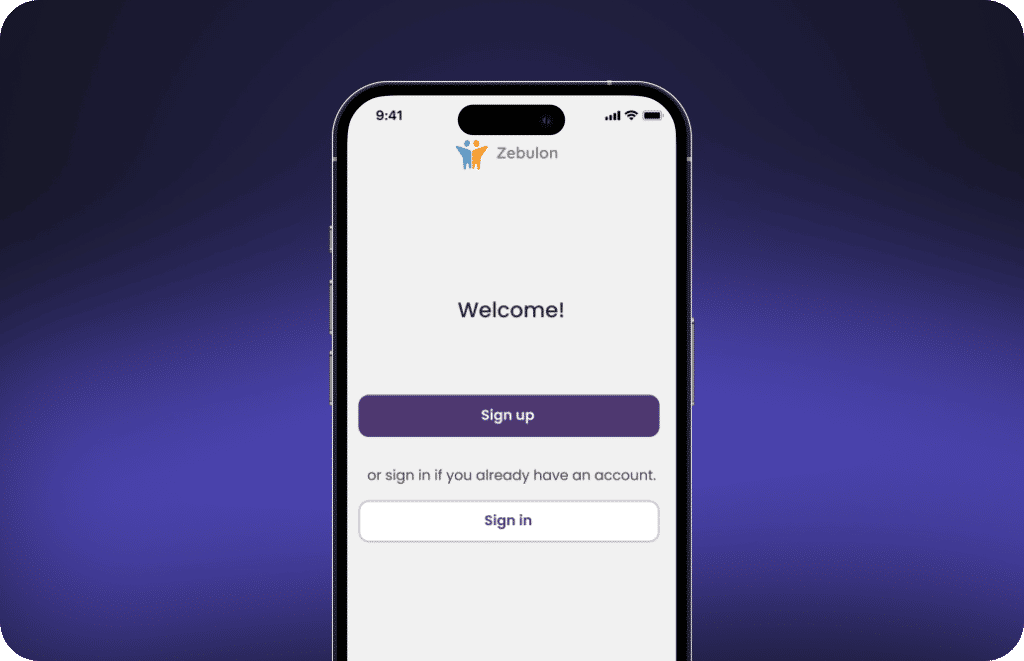
From the user’s perspective, a smooth onboarding experience is as important as any core feature. To support this, we designed a streamlined sign-up flow that requires only essential information—name, phone number, and password. After submitting these details, users complete a quick phone verification and can immediately access the application.
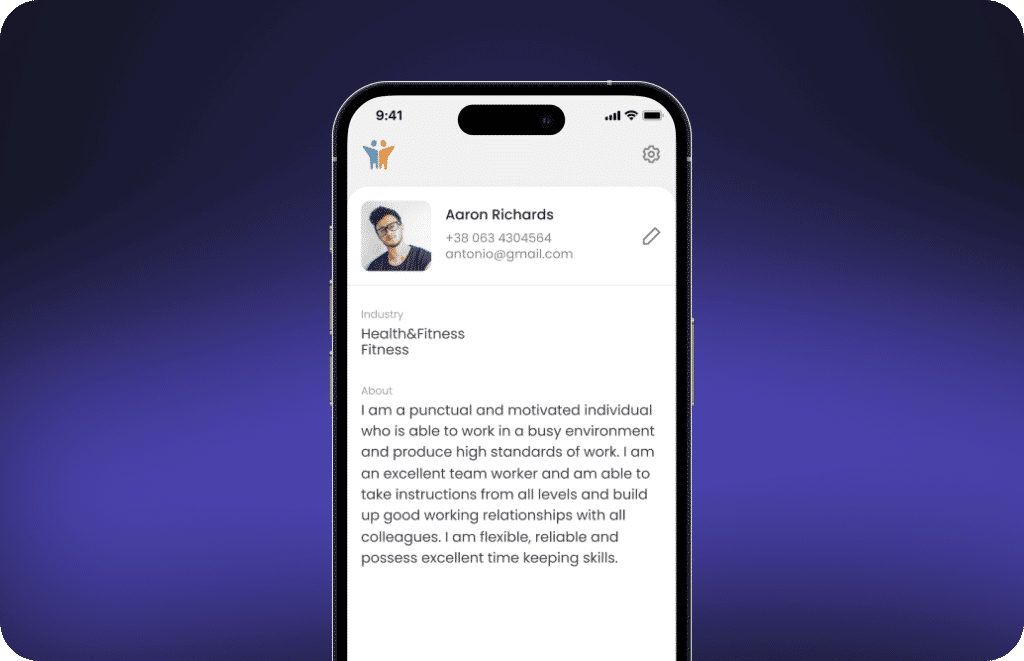
Profile & settings
In the profile section, users can add their email address, indicate areas of interest, and provide a brief description. The settings panel allows users to manage their subscription plan, configure notifications, and access support whenever needed.
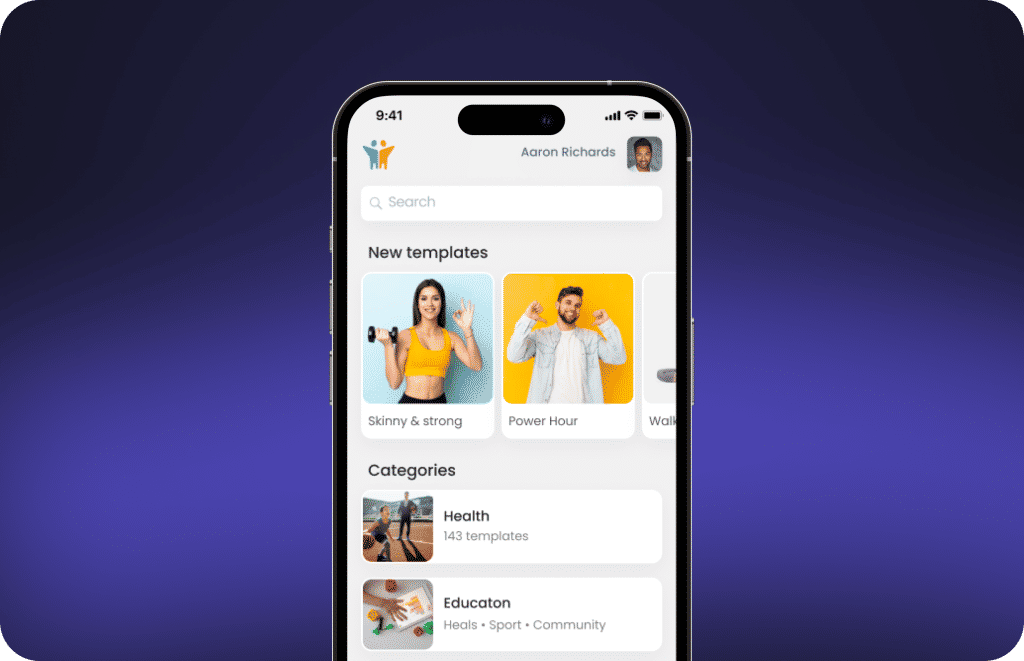
Templates
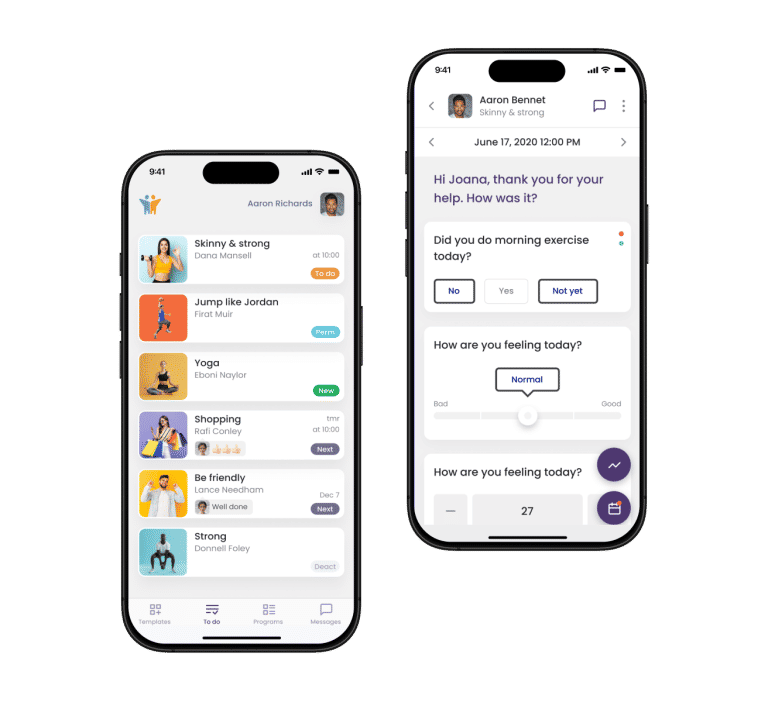
Users can browse a library of standard templates directly from the main screen and preview each option to quickly choose the one that fits their needs.
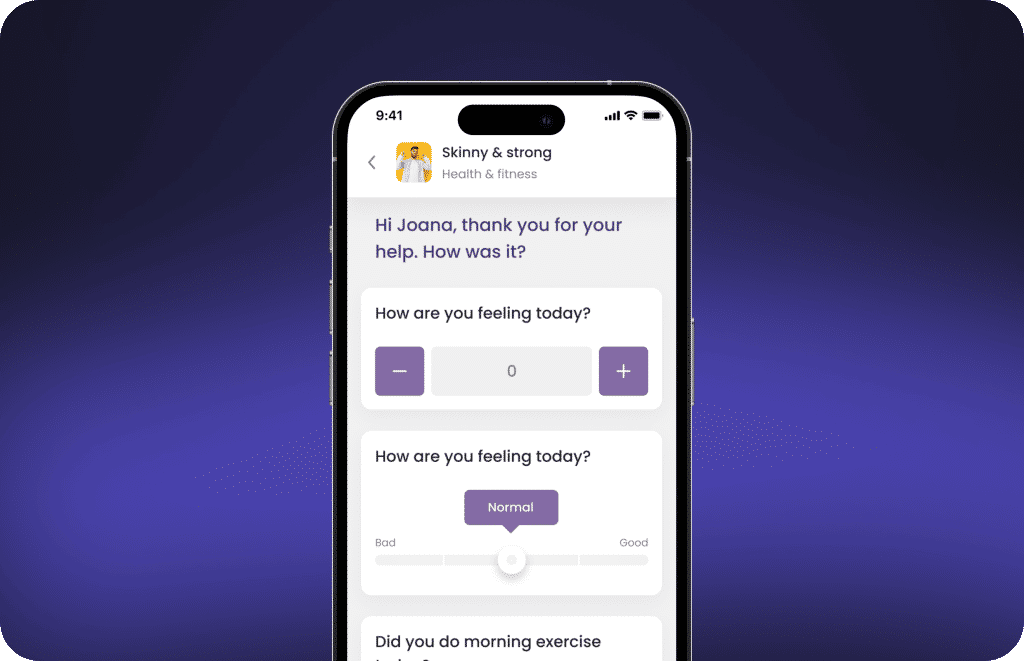
Programs
Users can create new surveys or customize templates, set deadlines and recurrence, and monitor completion status for every participant involved.
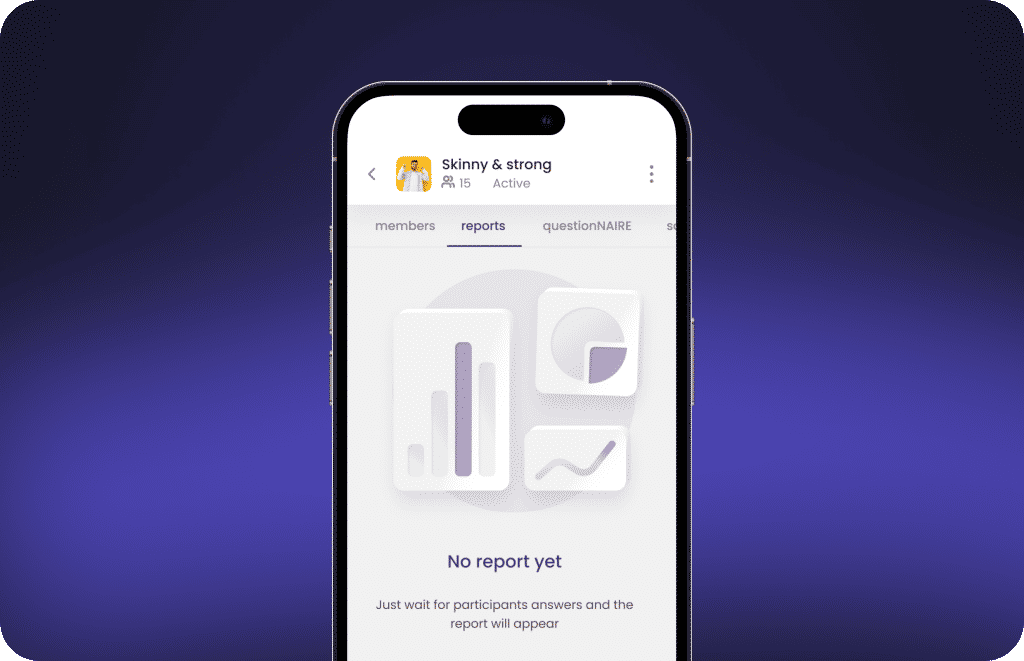
Reports
Users can view survey outcomes through clear visualizations, enabling data-driven insights and informed improvements to their activities and workflows.
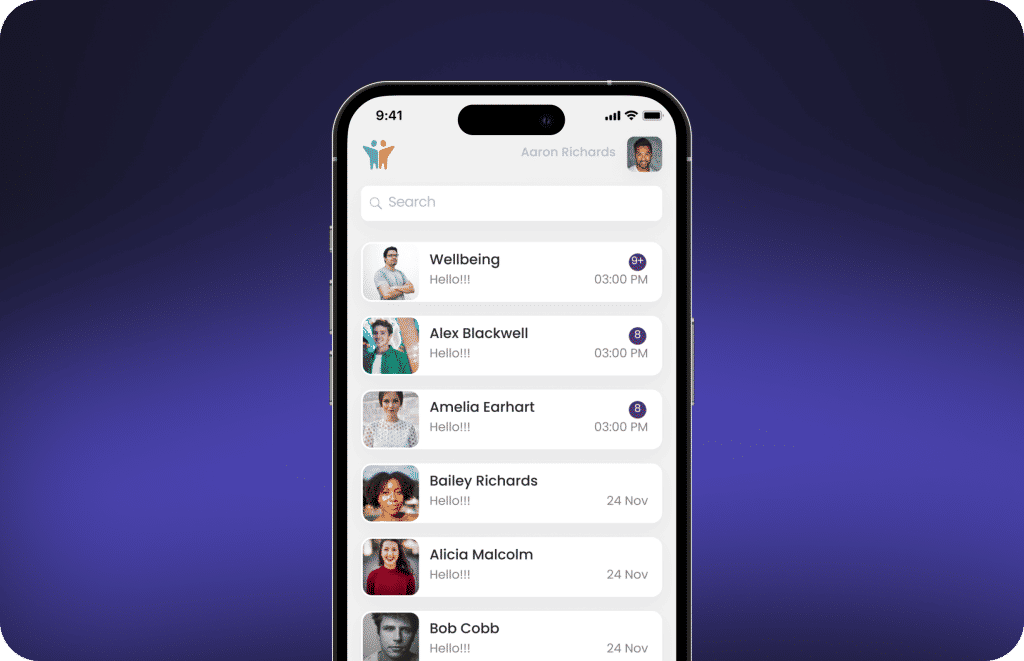
Secure messaging
A secure messenger lives within the app and is readily available so you can message your colleagues, patients, and their families.
Improved data accessibility for health teams
The platform now centralizes sensitive health information and repeat survey data, giving clinicians actionable insights they previously lacked or struggled to collect.
Accelerated launch of a fully functional Medtech MVP
A cross-platform mobile solution with secure data handling, interactive analytics, and configurable survey tools was delivered from concept to release in 4 months.